Project 07 Quito, Ecuador 2026

Civic Quarry

Type Natural History Museum
Status Competition Proposal
Class 4B Studio
Instructor Marcelo Spina
Scroll to explore

Overview

A public building extracted from the density of the city itself. Rather than adding to the urban mass, the project removes, carves, and reveals.

Program
Natural History Museum
Site
Quito, Ecuador — full city block
Strategy
Subtraction — the block as raw material
Seam
Civic program exposed in the cuts
Massing
Angular shards around a public crossing
Model
Sectional — sliding black volumes, orange seams

Interactive Extraction Sequence

01 The Cube One volume at the scale of the block — the museum begins as a single found mass.
02 The Axes Two axes are drawn through the center, rotated and shifted off-grid — vertical cuts split the cube into four shards.
03 The Strata Random horizontal planes section the shards — the cuts become the orange seams of civic program.
Scroll to extract Drag to orbit

Concept The City as Raw Material

"Rather than adding to the urban mass, the project removes, carves, and reveals — treating the existing city block as raw material and civic program as the exposed seam within."

A quarry produces form by extraction: what remains is shaped by what was taken. Applied to a dense block in Quito, the operation generates a museum whose galleries are the leftover mass and whose public spaces are the cuts themselves — a natural history museum housed in a geological act.

Axonometric view the carved block in its urban fabric Fig. 01

Process

Carving
The Block

The massing comes from a single, repeatable operation. One cube; two axes drawn through its center, then rotated and shifted just off-grid; a set of random horizontal planes. The vertical cuts open the public crossing, the horizontal cuts produce the strata of galleries.

01 One cube — the block taken as found mass
02 Two axes through the center, rotated and shifted by a little
03 Vertical cuts split the cube into four shards
04 Random horizontal planes cut the shards into strata — the seams of civic program
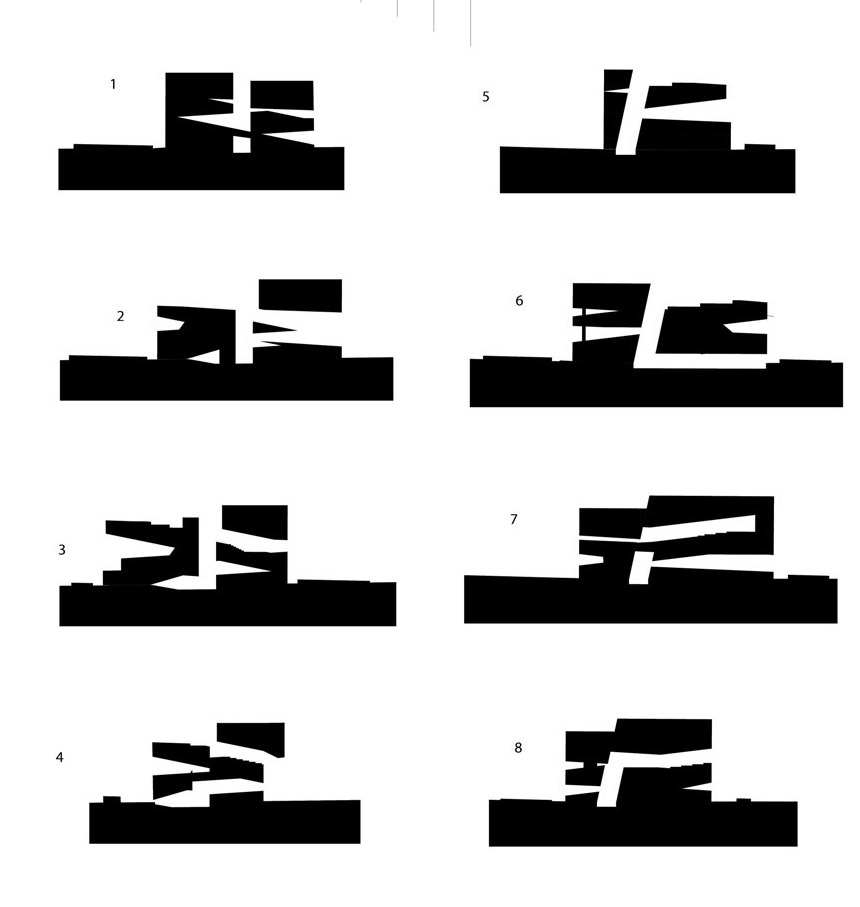
Massing study sequence — iterative subtraction diagrams of the city block

Precedent

Villa Giulia,
Quarried

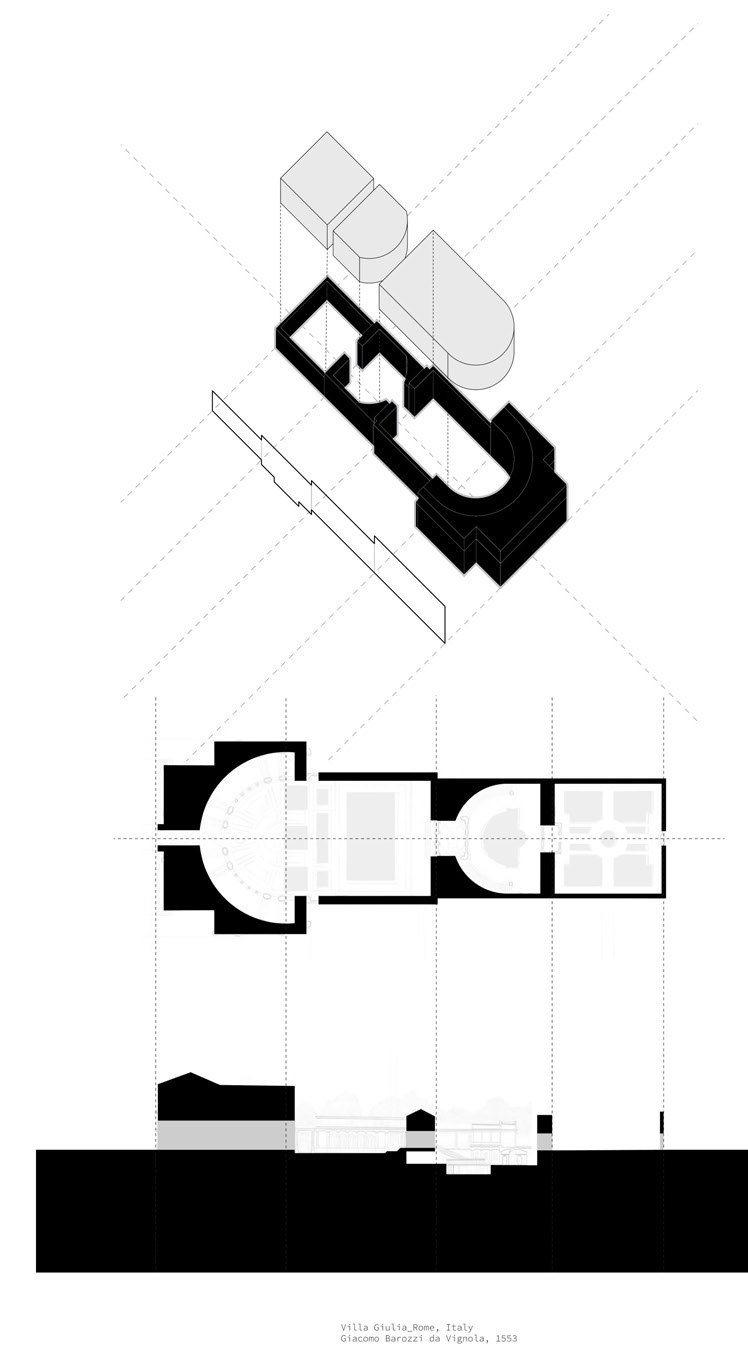
Vignola's Villa Giulia in Rome is read as a proto-quarry: a solid figure whose courtyards and exedra are carved from the mass rather than added to it. The precedent study decomposes its plan and section into figure and void.

The same operation, scaled to a Quito city block, generates the museum.

Precedent study — plan, section, and massing decomposition of Villa Giulia, Rome (Vignola)
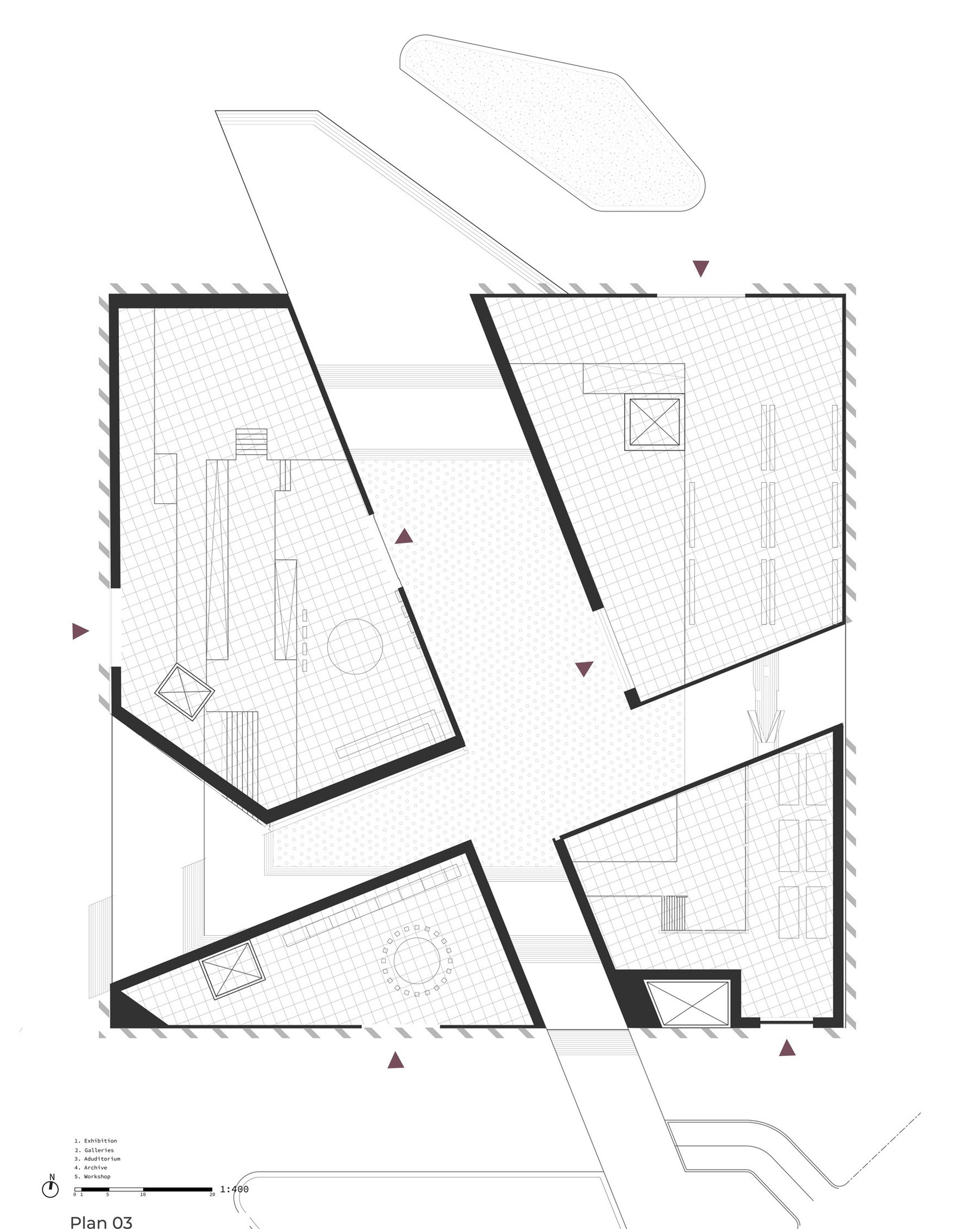
Ground plan the public crossing through the quarried block Fig. 02

Plan 03

Galleries
In The Mass

Upper-level galleries occupy the retained black volumes. Their angular geometry follows the logic of the cuts — each room is the residue of an extraction, lit through the seams rather than through conventional openings.

Plan 03 — upper level gallery plan of the four angular volumes

Physical Model

The Sectional
Model

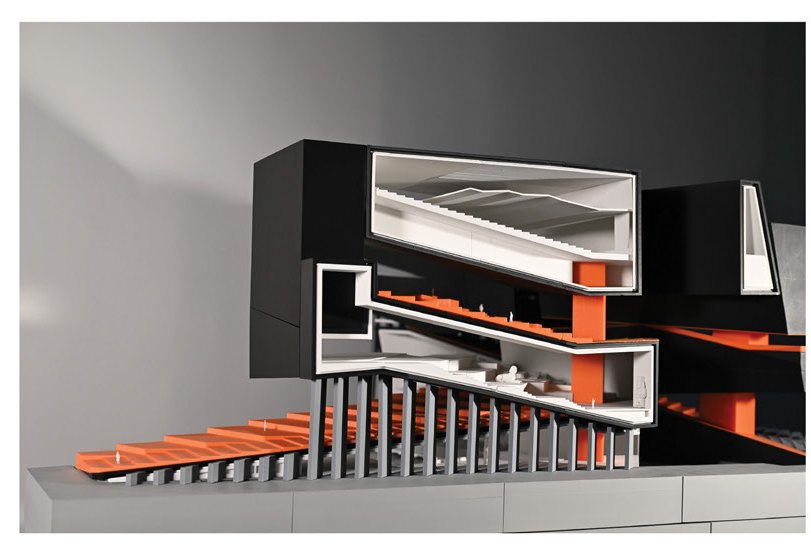
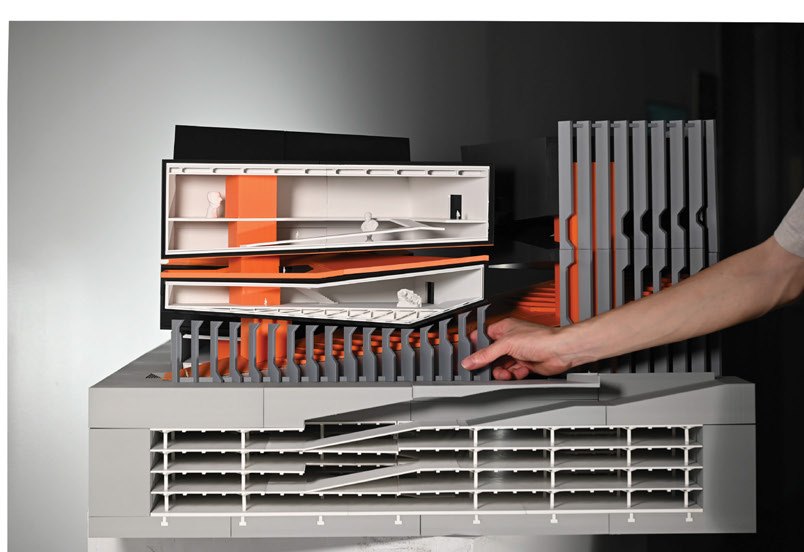
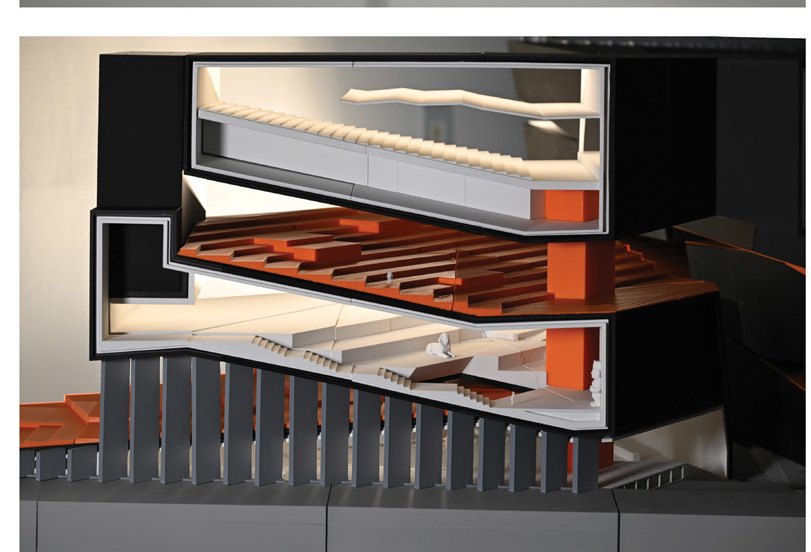
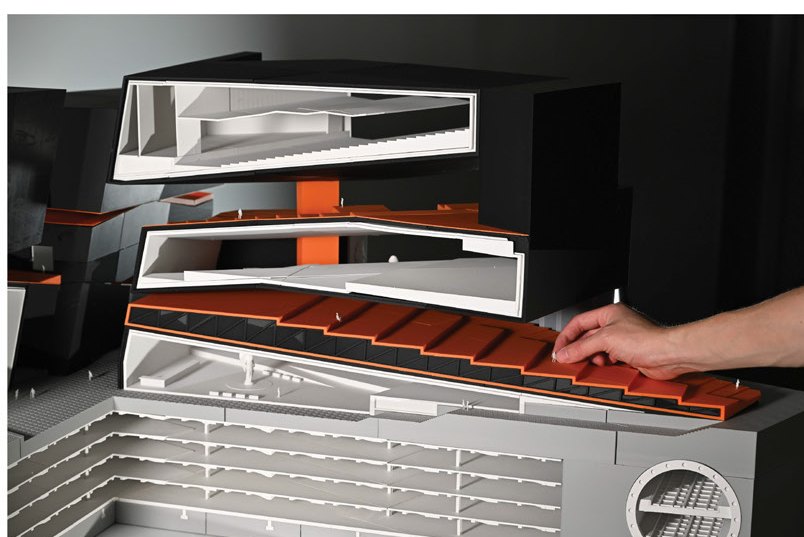
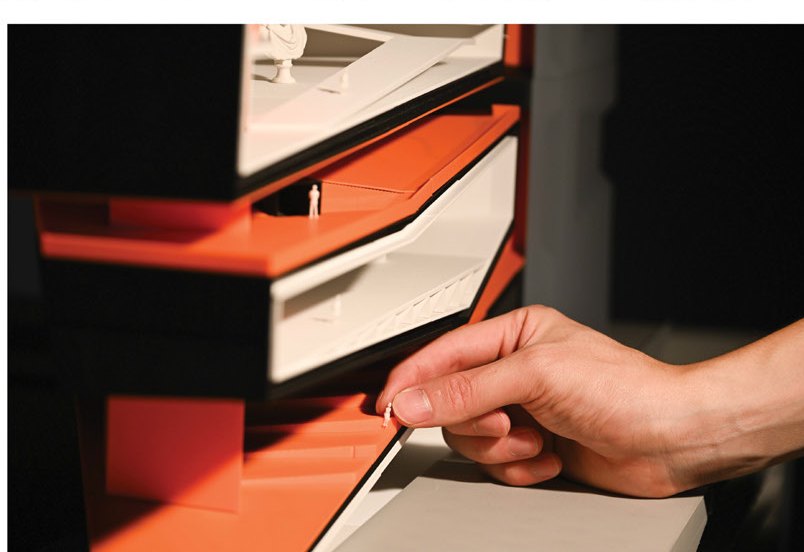
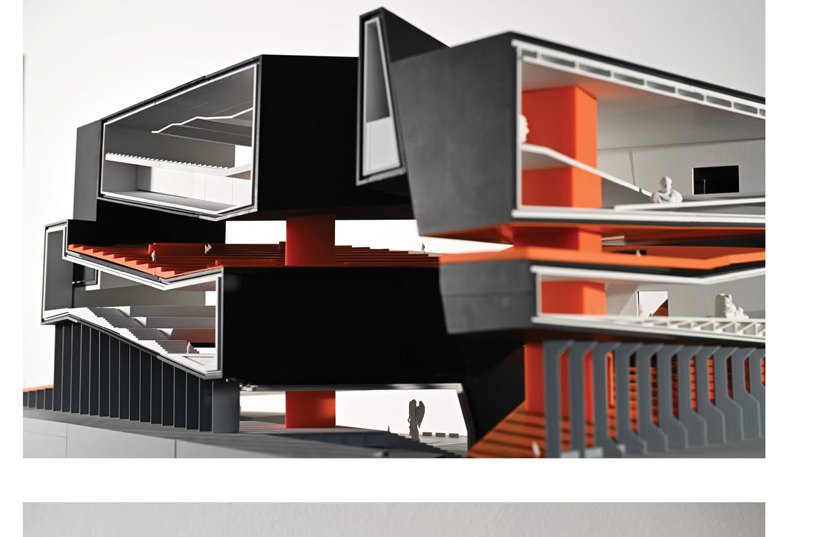
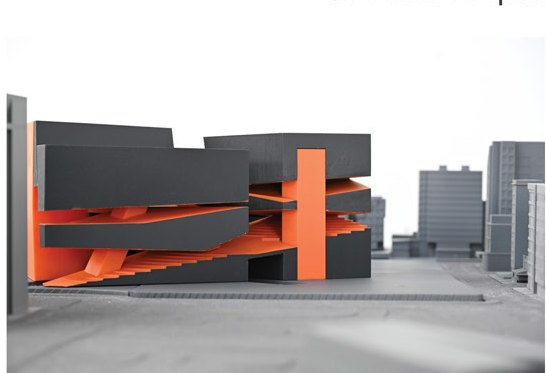
The model works like the building: black volumes slide apart to expose the orange seams of civic program within. Every extraction the design proposes can be performed by hand on the model itself.

Sectional model — black volumes slid open to expose the orange seam
Sectional model — hand pulling a gallery volume out of the massing
Sectional model — interior strata and orange circulation seam
Sectional model — roofscape with orange seam running through the shards
Sectional model — hand opening an orange program drawer
Sectional model — open section through galleries and seams
4B Studio Museum Competition Subtraction Urban Quito

Site Model Quito

The Quarry
In The City

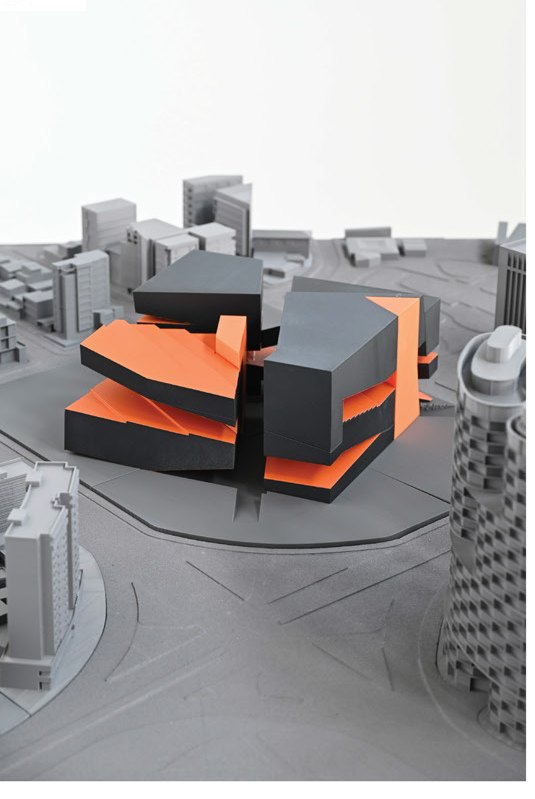
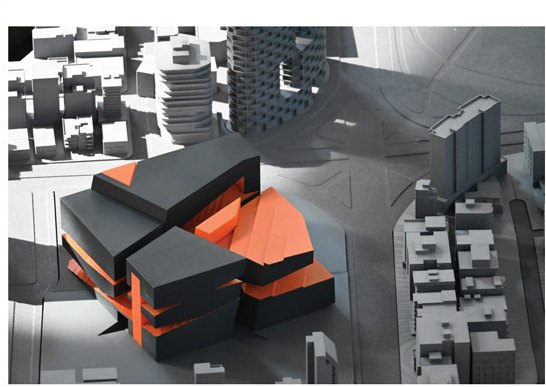
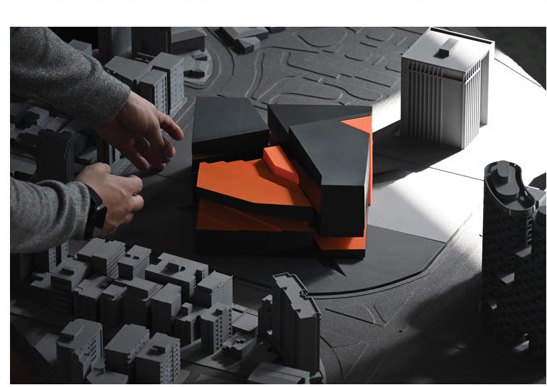
The massing model sits in a gray context model of the Quito site. Against the neutral city, the black shards read as retained mass and the orange seams mark where the block has been opened to the public.

Massing model in site context — orange seams between black shards
Massing model in site context — aerial view of the carved block
Massing model in site context — the block within Quito's urban fabric
Hands adjusting the massing model in the site context

Back to

All
Work