Overview
A kinetic self-portrait machine. A camera reads the viewer's face in real time, reduces it to a binary grid of 64 pixels, and hands each value to a stepper motor hidden behind a panel.
Interactive Simulation
Live demo — move your cursor across the panel field
This is a browser simulation of the built machine. Each of the 64 panels tilts on its horizontal axis, catching light exactly the way the lenticular tiles do on the physical mirror. Where the real installation tracks a face through its onboard camera, this simulation tracks your cursor — the panels nearest to you rotate open, and the red service light behind the array leaks through the seams.
The result is the same argument at a different scale: a reflection that is abstracted, delayed, and mechanical rather than optical.
Diagram Abstracted Reflection
A viewer waves; the camera reads the gesture; a half-beat later, 64 panels answer. The reflection is never smooth — it snaps from state to state at the speed of the motors, always one step behind the body it mirrors.
Concept Mechanical Reflection
"The result is a living, mechanical reflection — abstracted, delayed, and entirely built by hand."
The project asks what a mirror is when its resolution collapses to 64 pixels. The viewer is present in the surface, but only as a coarse, shifting figure — recognition happens through movement rather than likeness. The machine's latency, the audible steppers, and the visible seams are not defects; they are the subject.
System
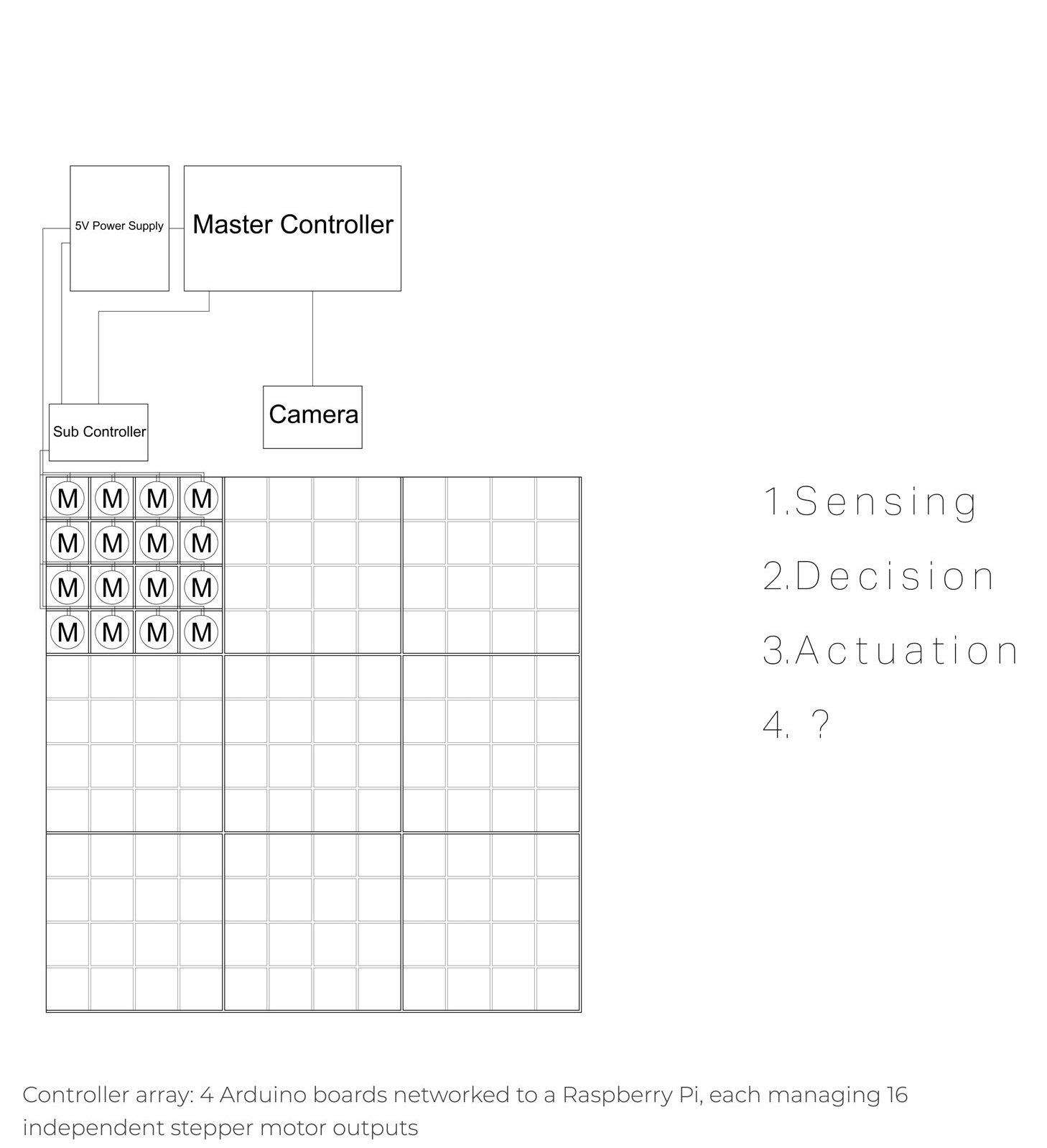
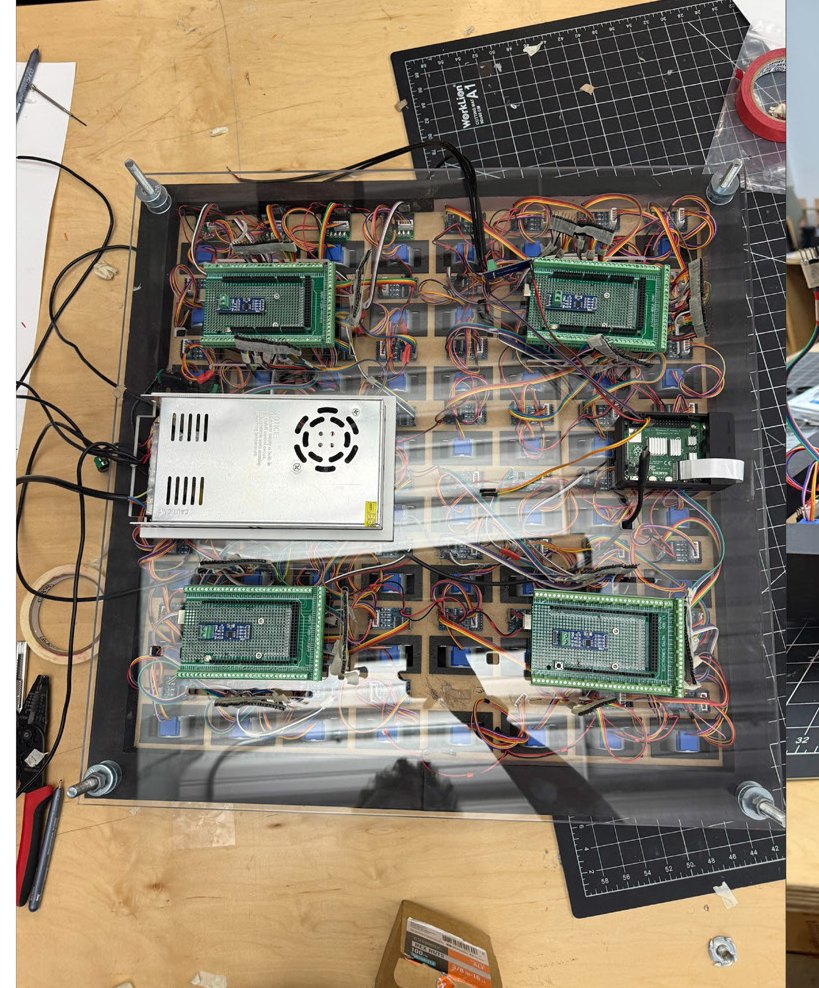
A camera feed is downsampled to an 8 × 8 binary image. A Raspberry Pi distributes the frame to four networked Arduino boards, each managing sixteen independent stepper channels. Every panel then rotates to its commanded state, and the lenticular surface shifts between white and black as it turns.
The Machine
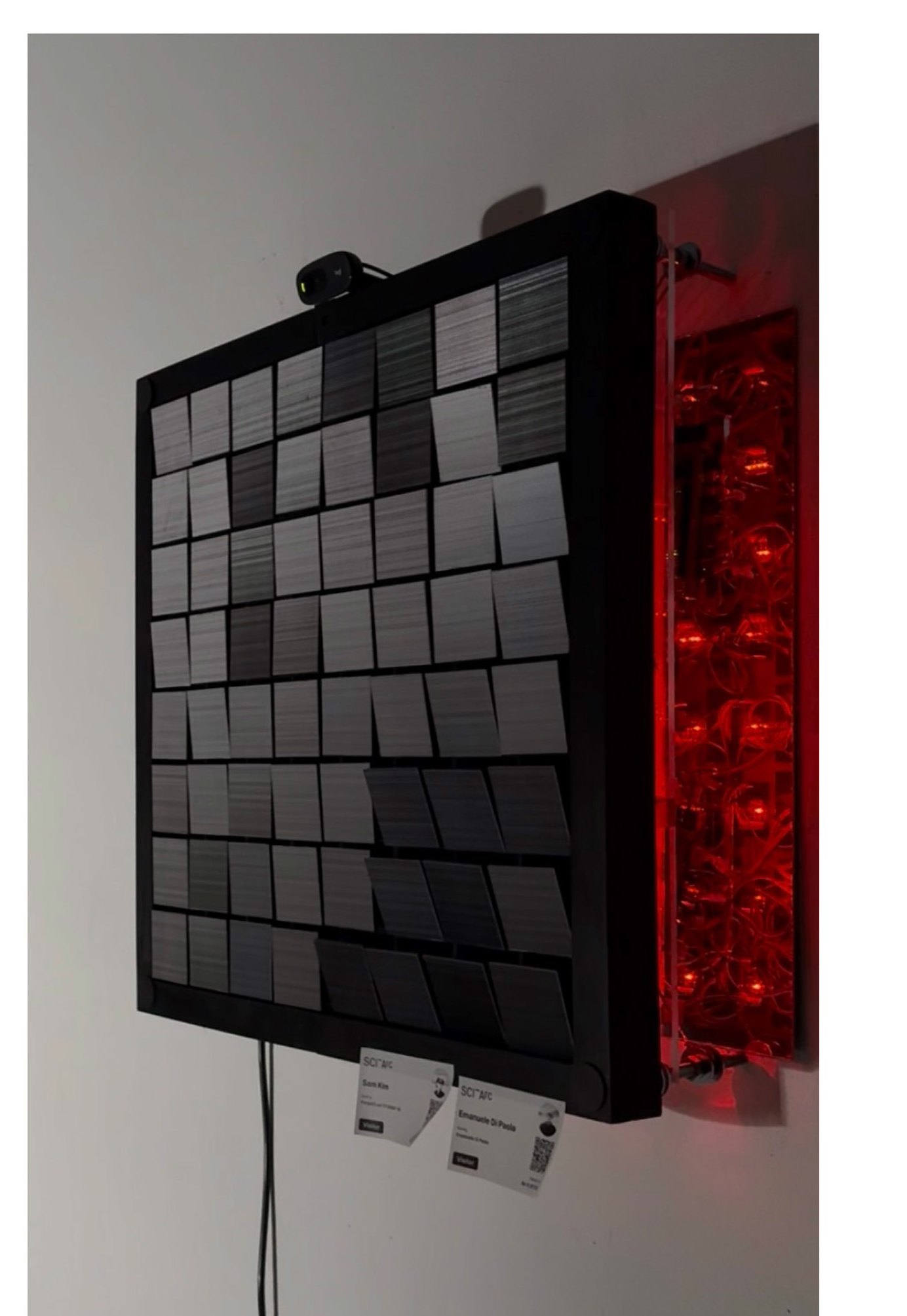
The mirror at rest, panels in neutral position, awaiting viewer proximity. Behind the tile field, the drive electronics sit in a red-lit service bay — 64 motor channels wired by hand across the steel frame.
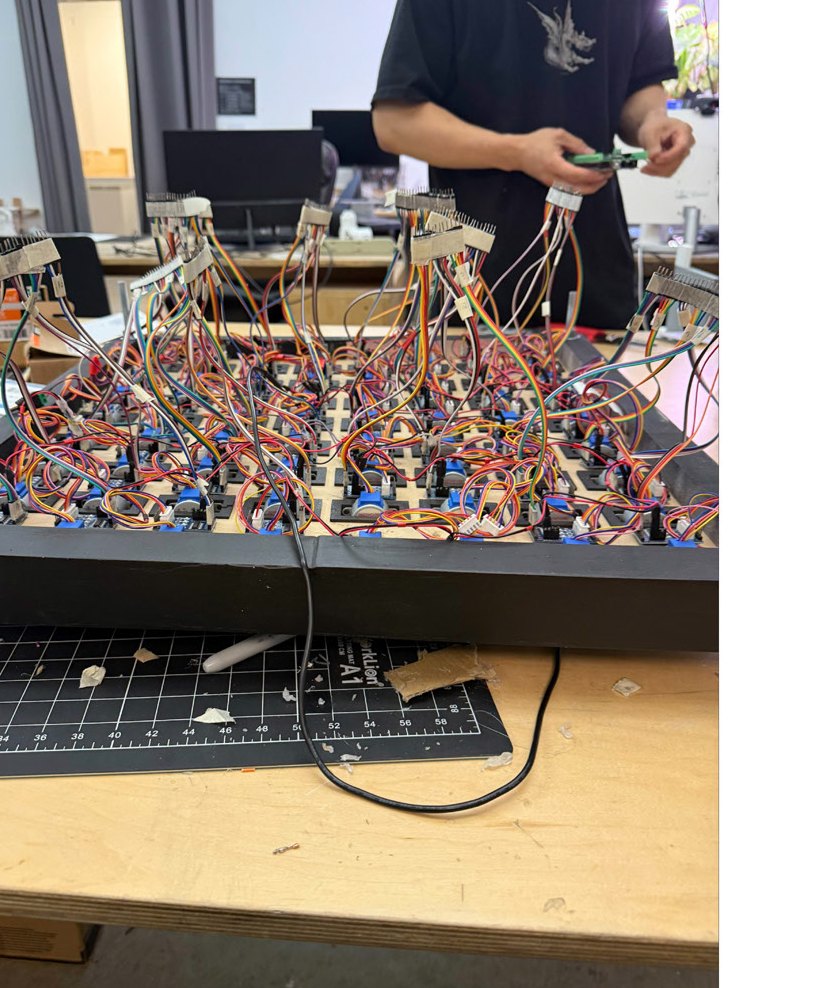
Every component is visible from the side: the machine does not hide that it is a machine.
Process PCB Assembly
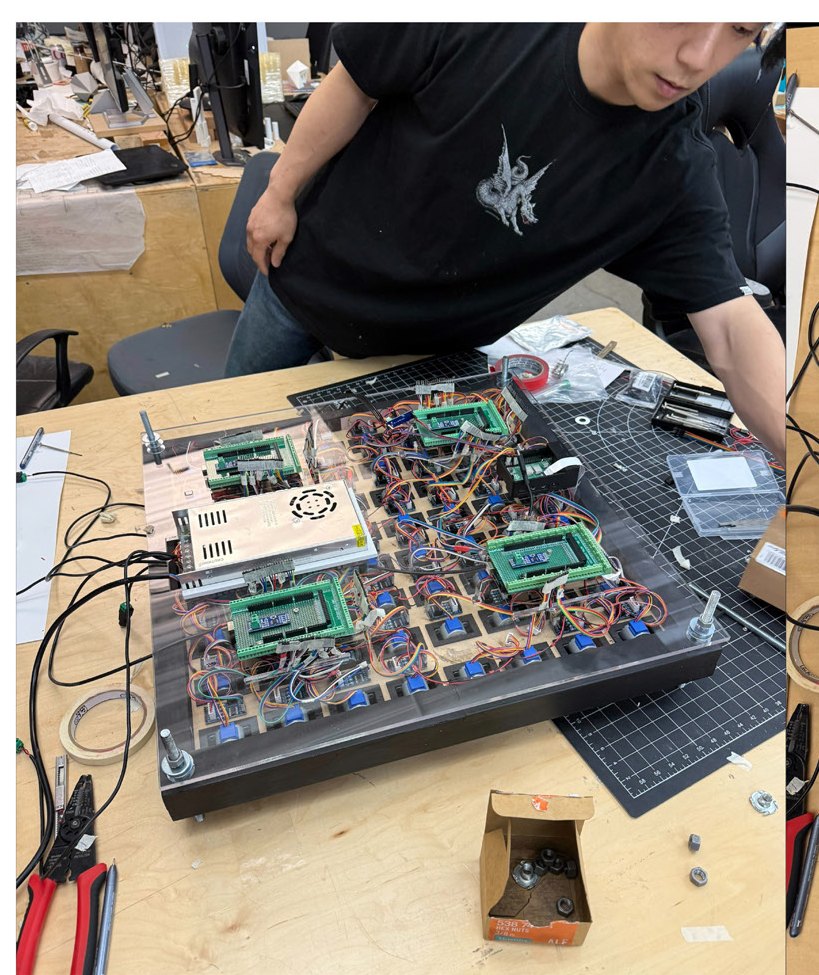
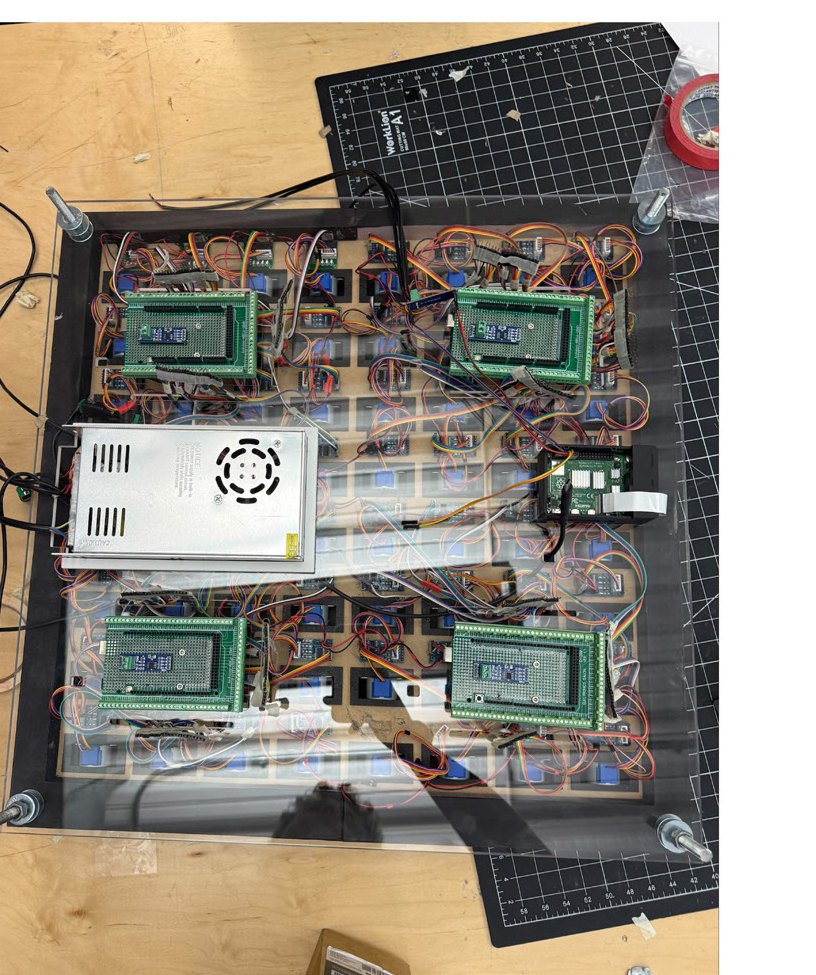
Manual wiring of the stepper driver modules across the 64-channel grid. Four driver boards, one power supply, and several hundred hand-routed connections.
Precedents
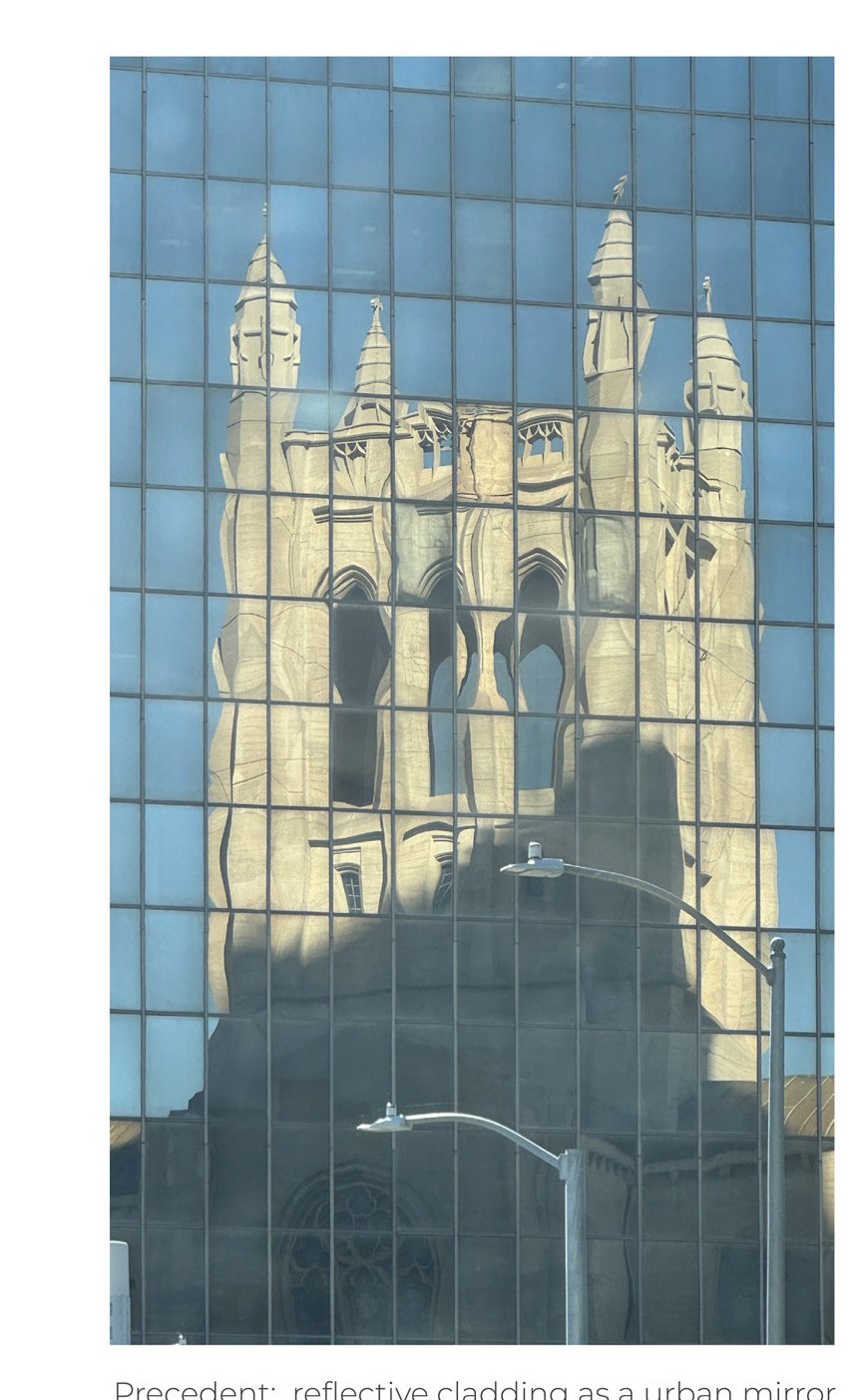
Reflective cladding as an urban mirror — the building as a surface of return.
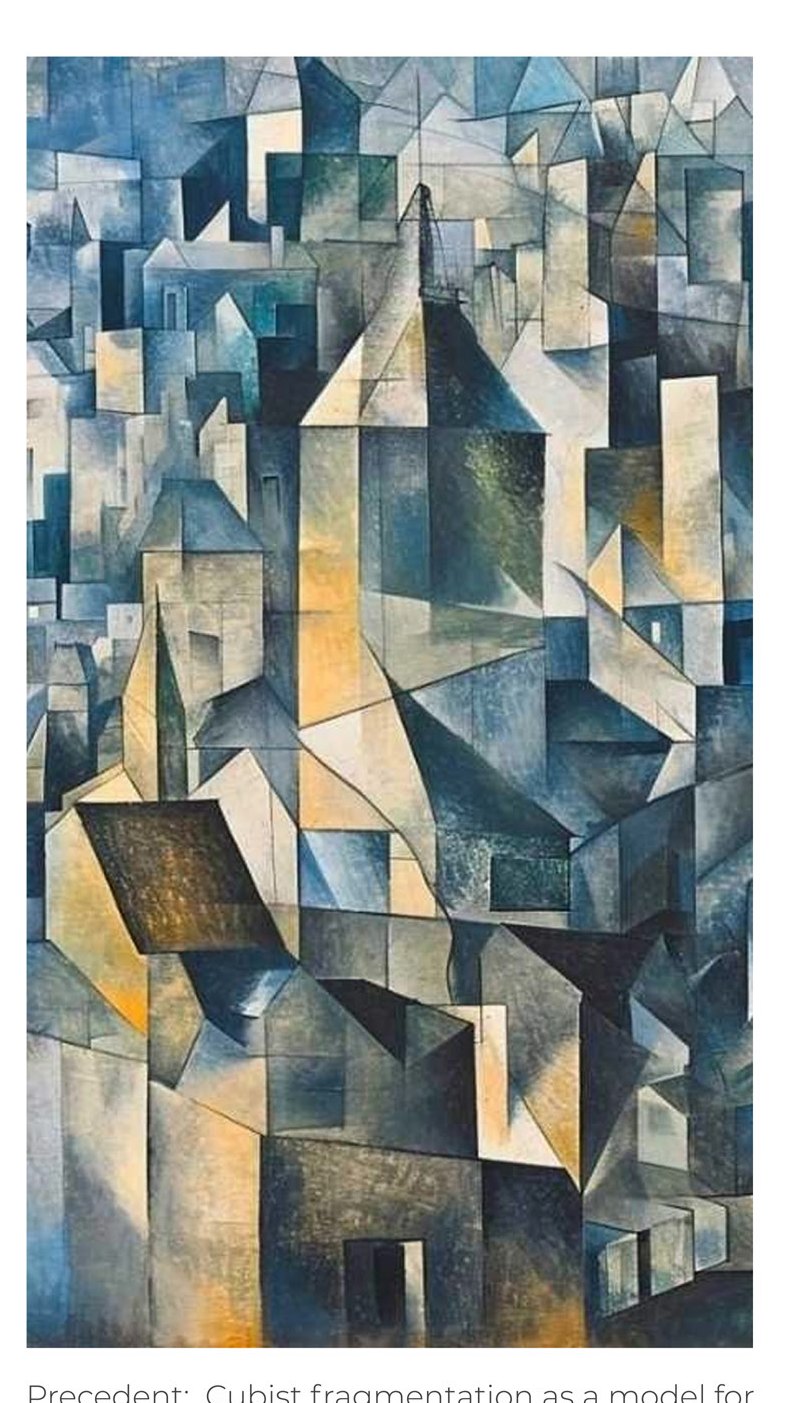
Cubist fragmentation as a model for pixelated, abstracted representation.