Diagrammatic Formation
Overview
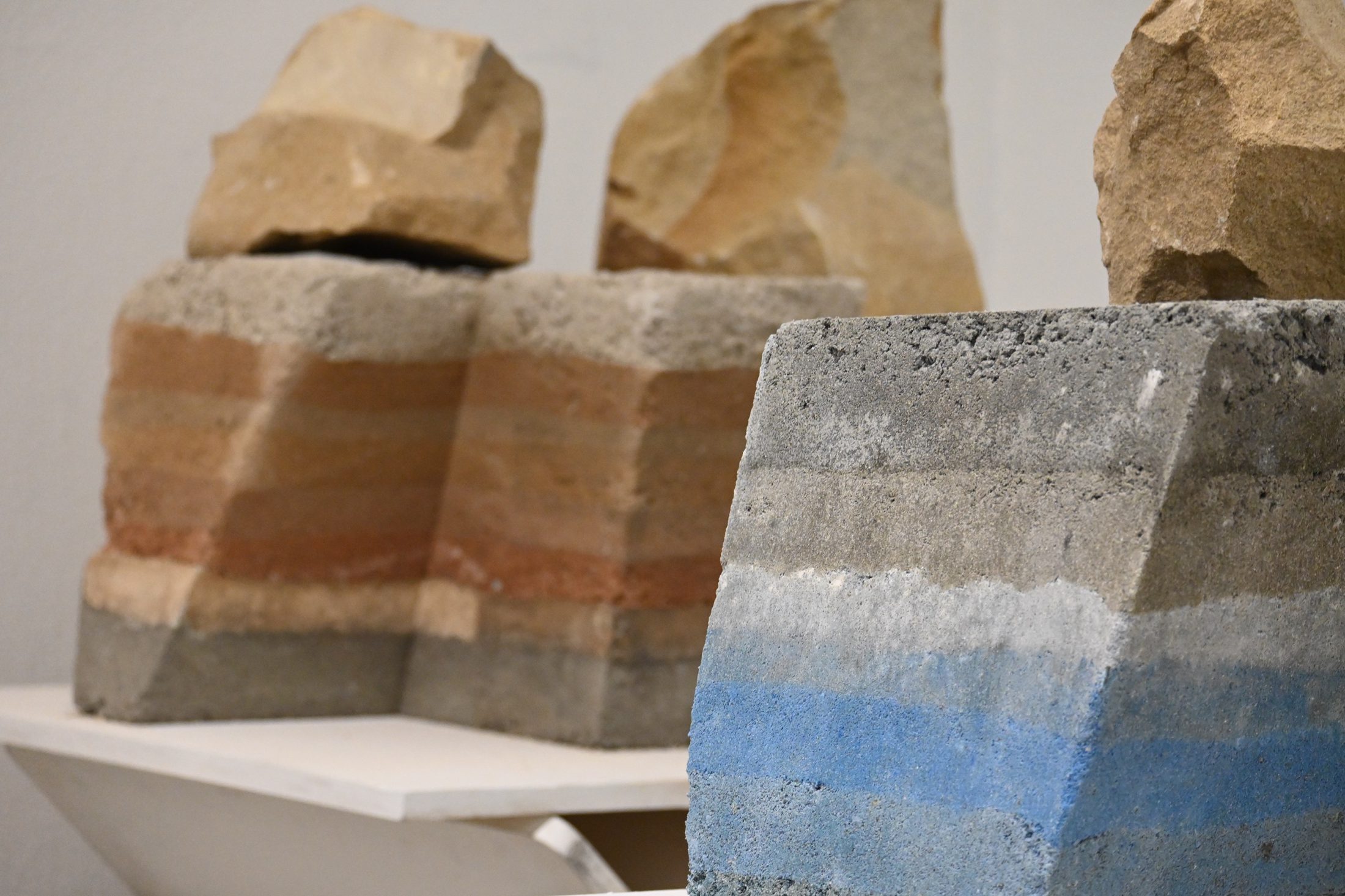
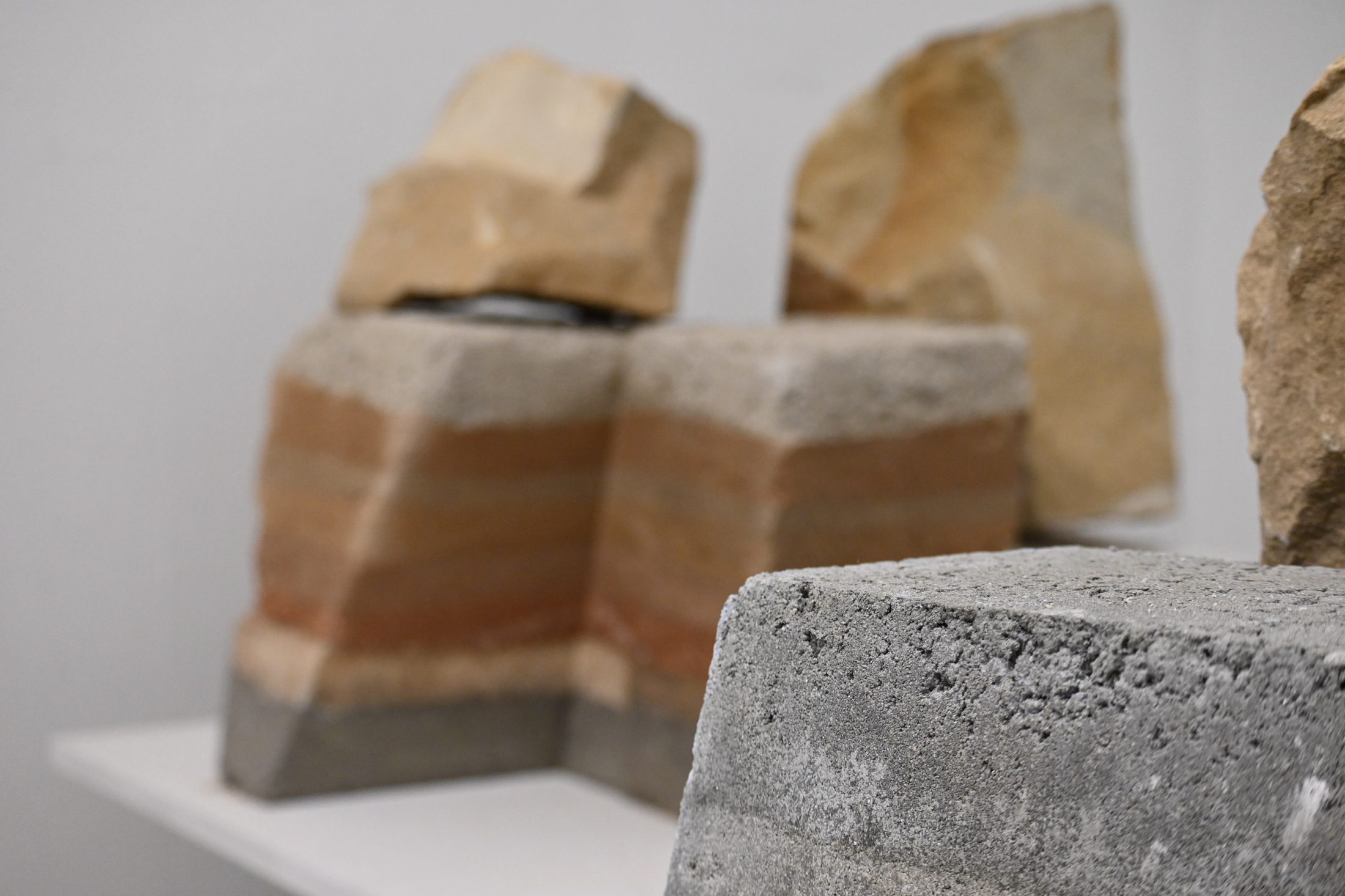
Three naturally formed rocks and three artificially formed ones: rammed earth pedestals that interlock, each with its own geology.
Emanuele Di Paola and Thomas Lee · Earth As Object, Marcelo Spina · SCI-Arc, Spring 2026
Diagrammatic Formation
From Pairs
to Pedestals
The material is a hybrid of traditional rammed earth and Roman concrete. The mix makes a solid that bonds and strengthens over time, while keeping the raw, unprocessed character that rammed earth is known for.
At first the studies humanized the natural rocks against the artificial ones, forming pairs that suggest things of daily life. That showed how rammed earth could live beyond building, but the sculptural gestures opened a gap between the real and the artificial. So we flipped the diagram: forms driven by the artificial rather than the natural, artifacts that hold more realness than what is natural, serving as interlocking pedestals with their own geological configurations.
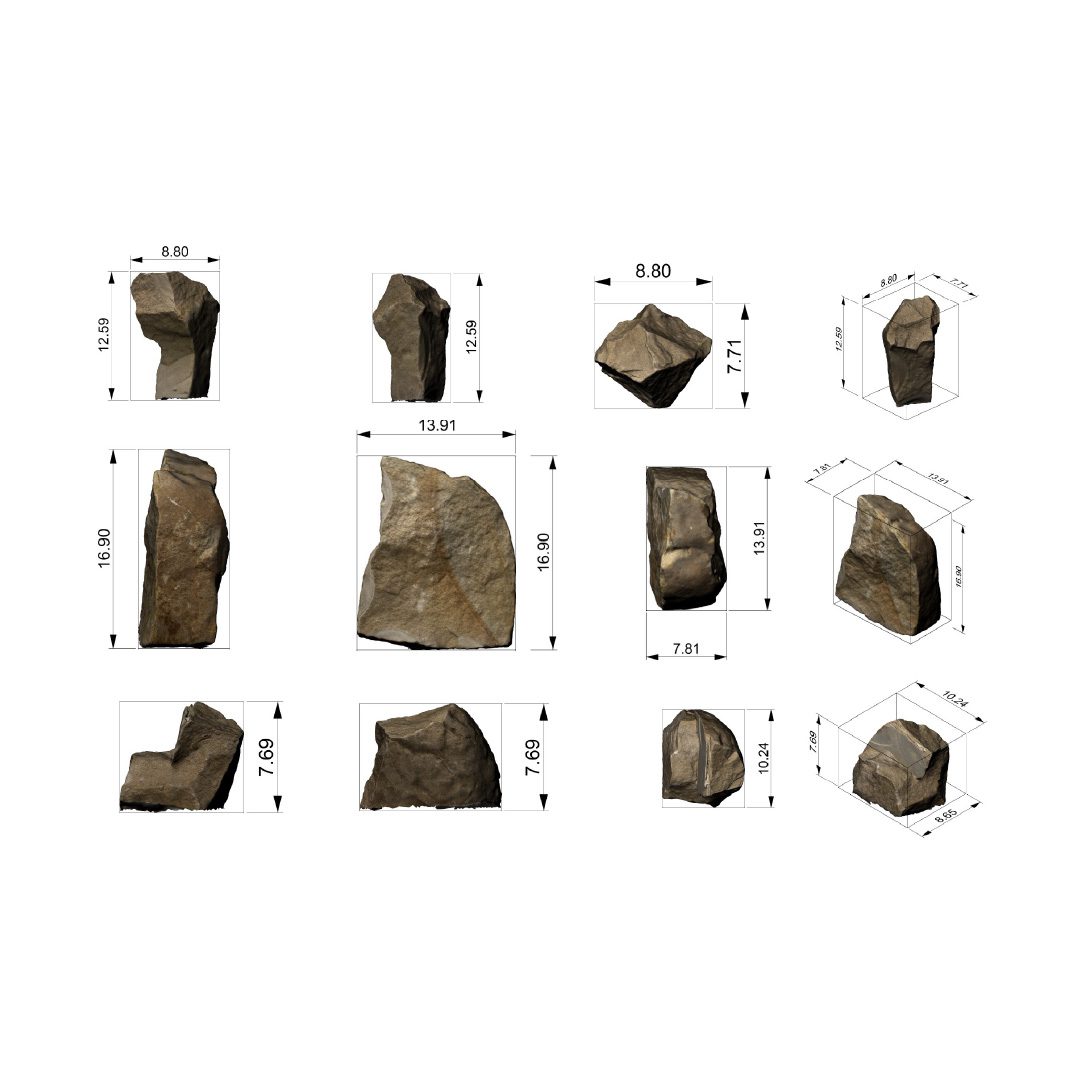 The rocks, scanned and measured
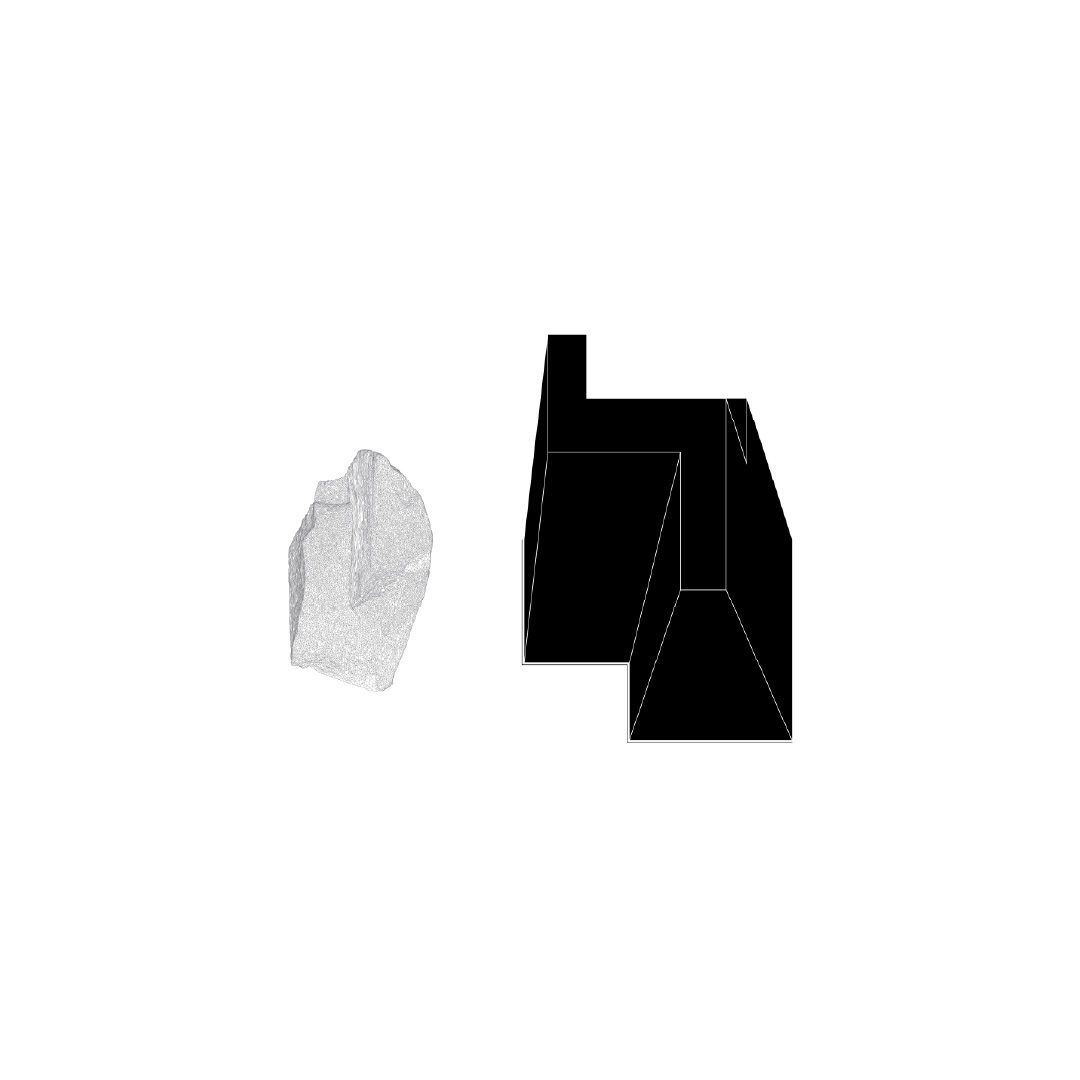 Rock and block, A
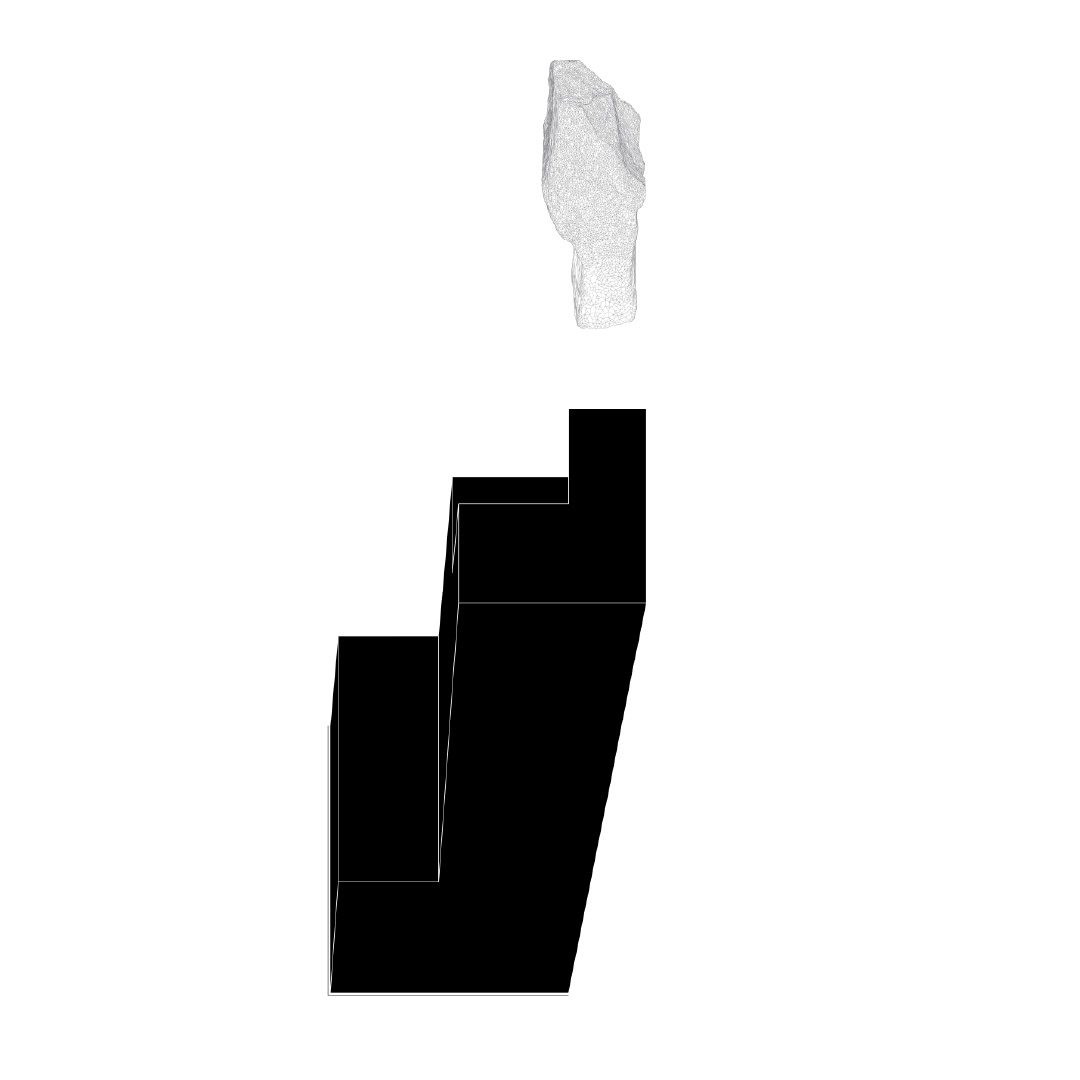 Rock and block, B
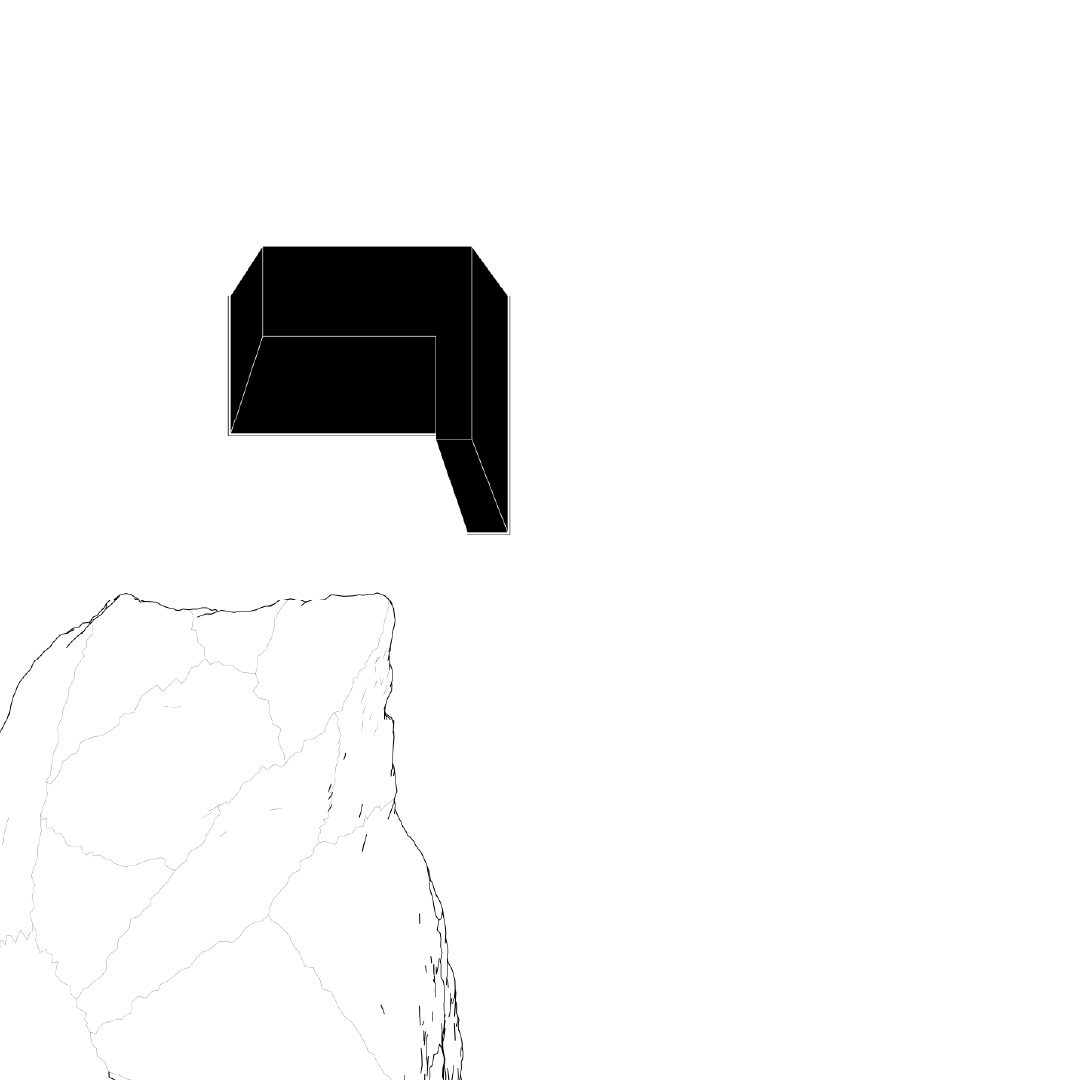 Rock and block, C
Point Clouds
The Rocks,
Scanned
Each rock was scanned with a phone and redrawn as a cloud of points: in three views, in slices, in its own colour, resting on the block, held by six forms, and through the stages from rock to formwork.
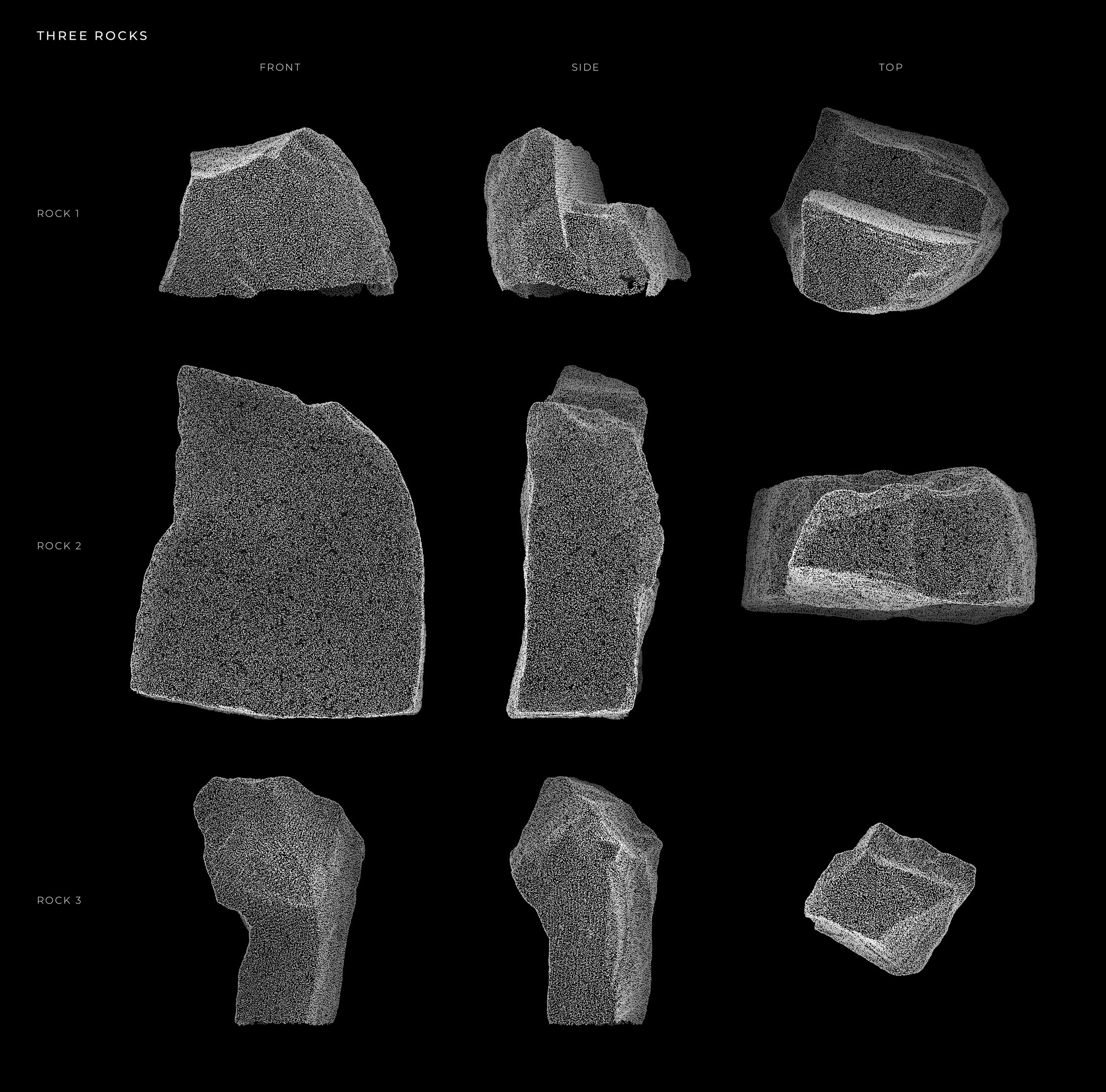 Three rocks
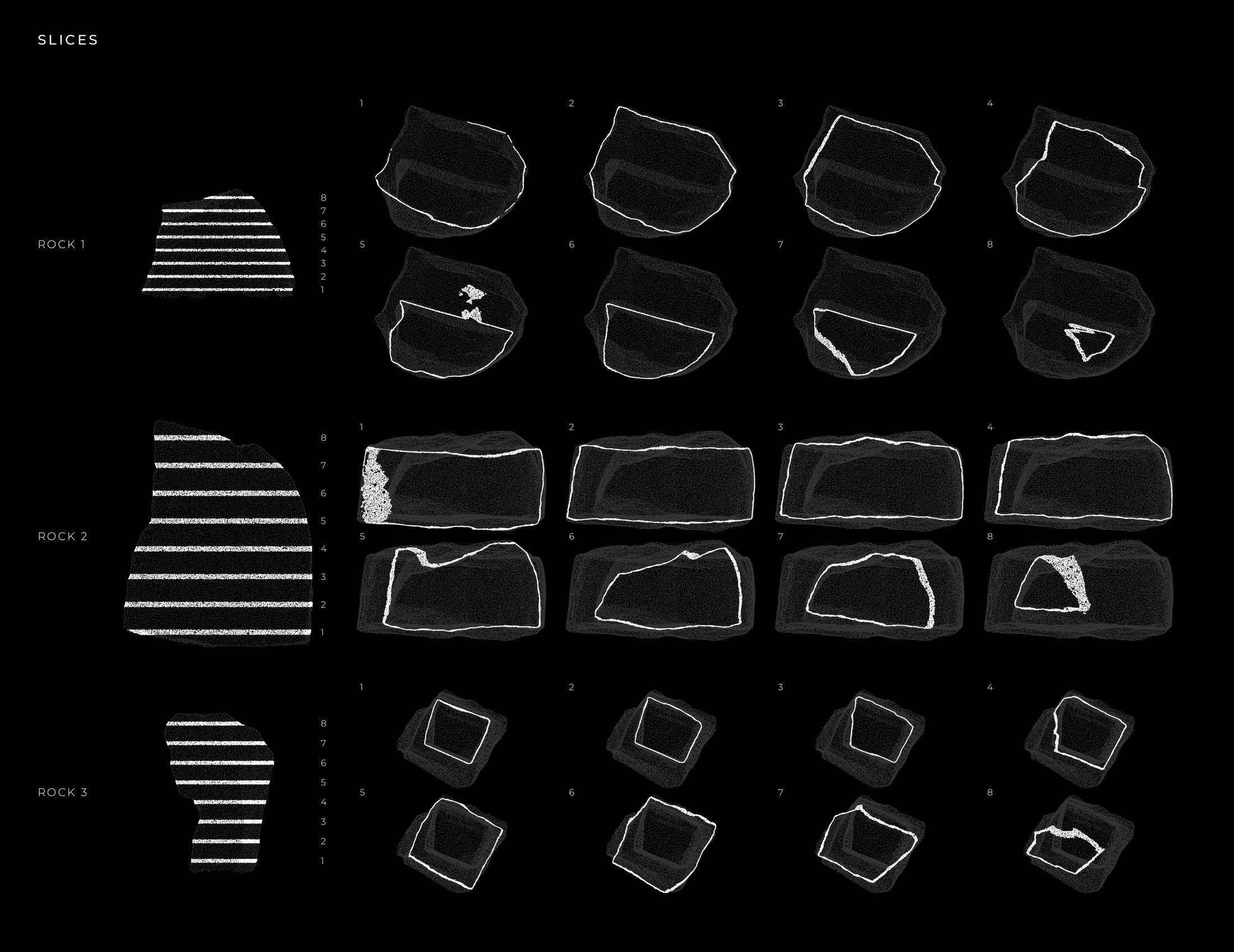 Slices
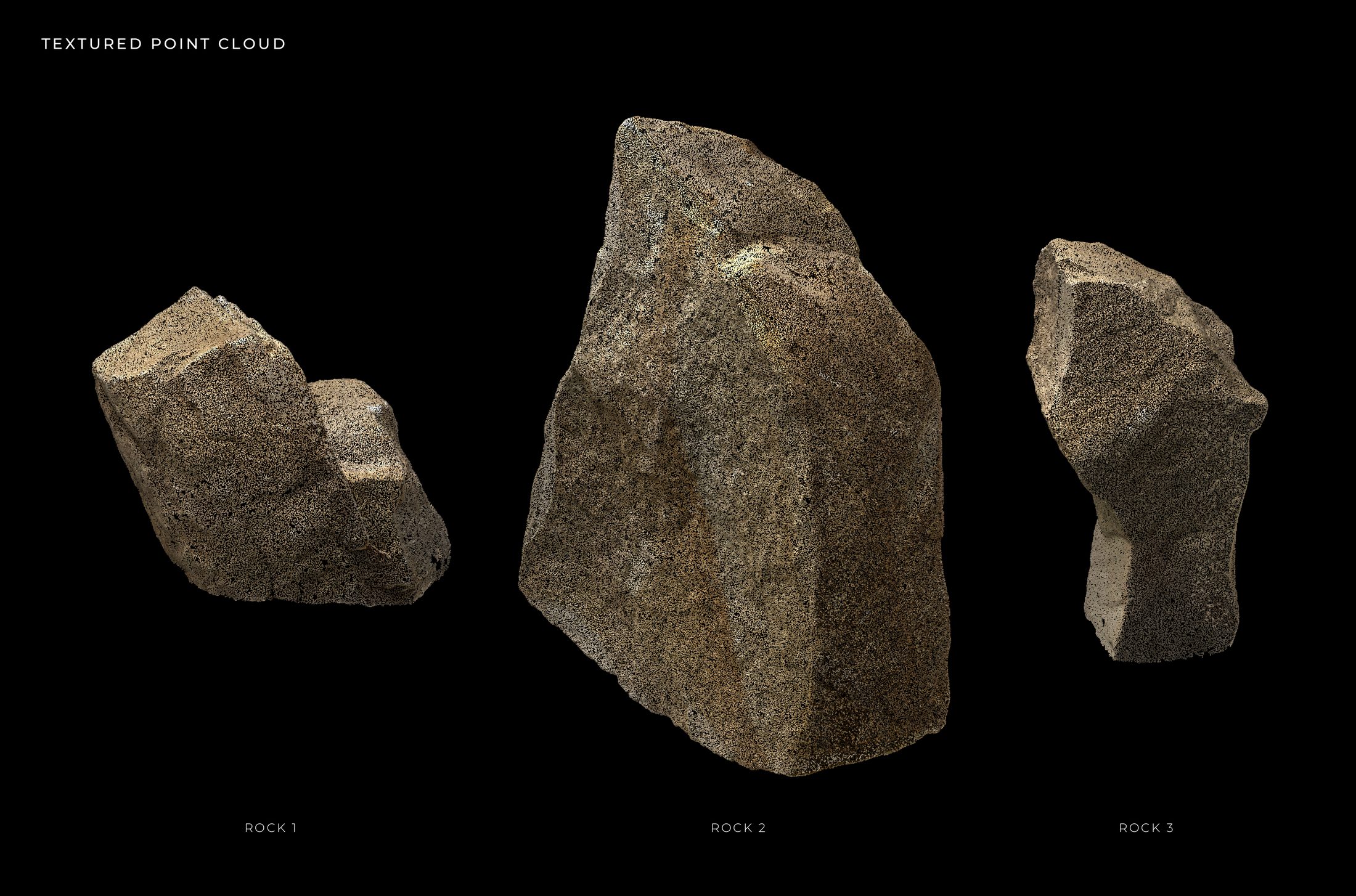 Textured point cloud
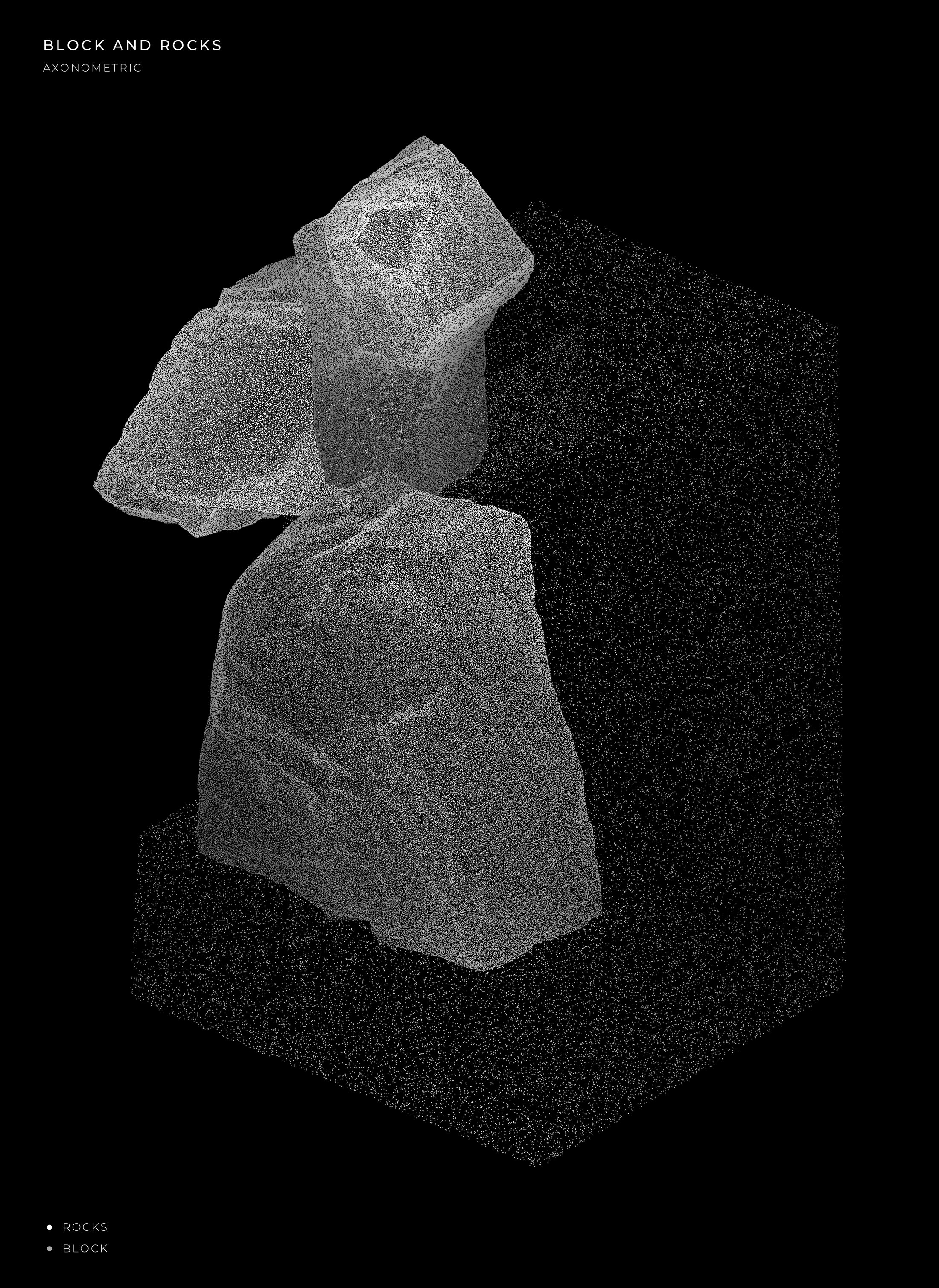 Block and rocks, axonometric
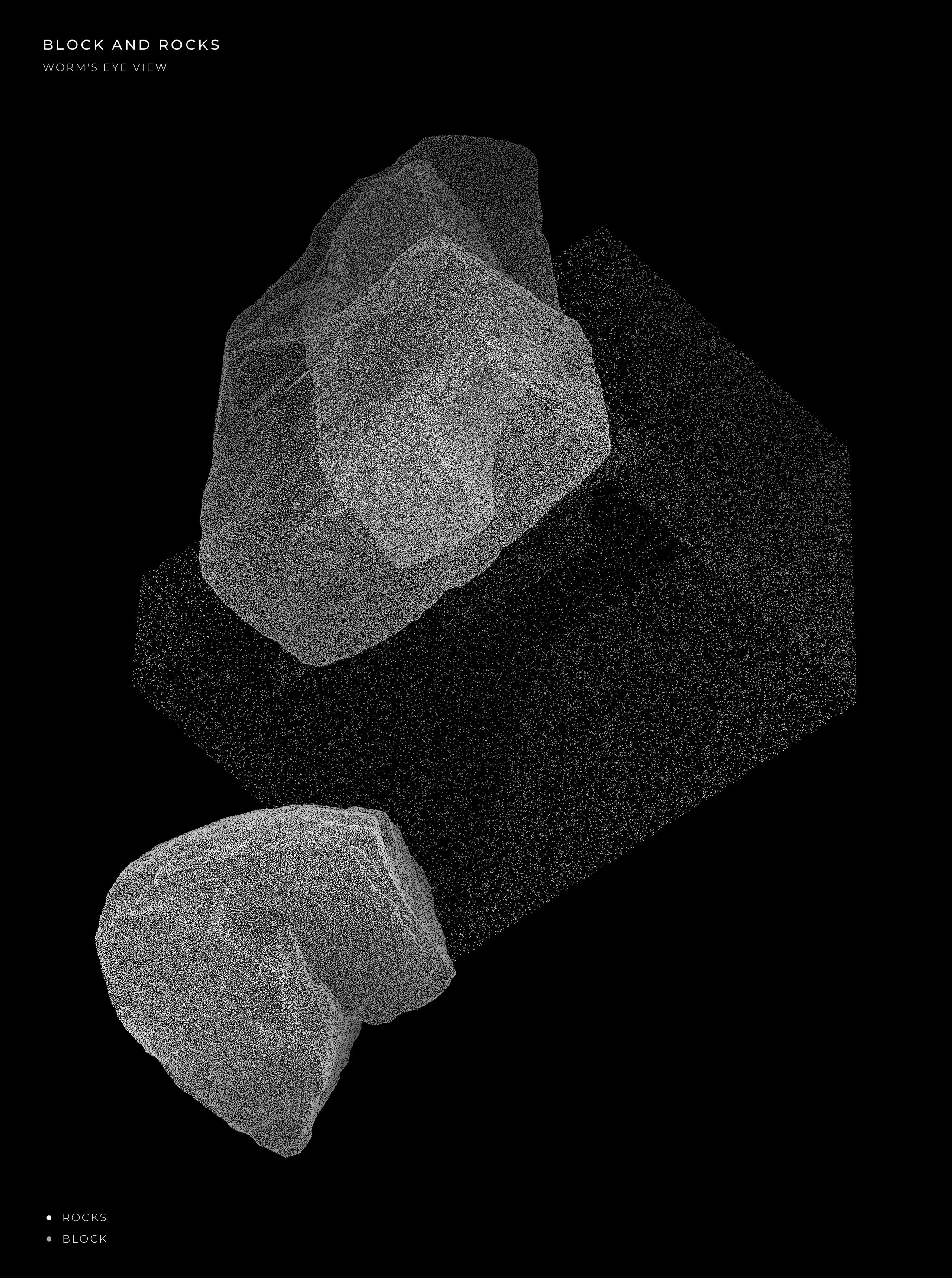 Block and rocks, from below
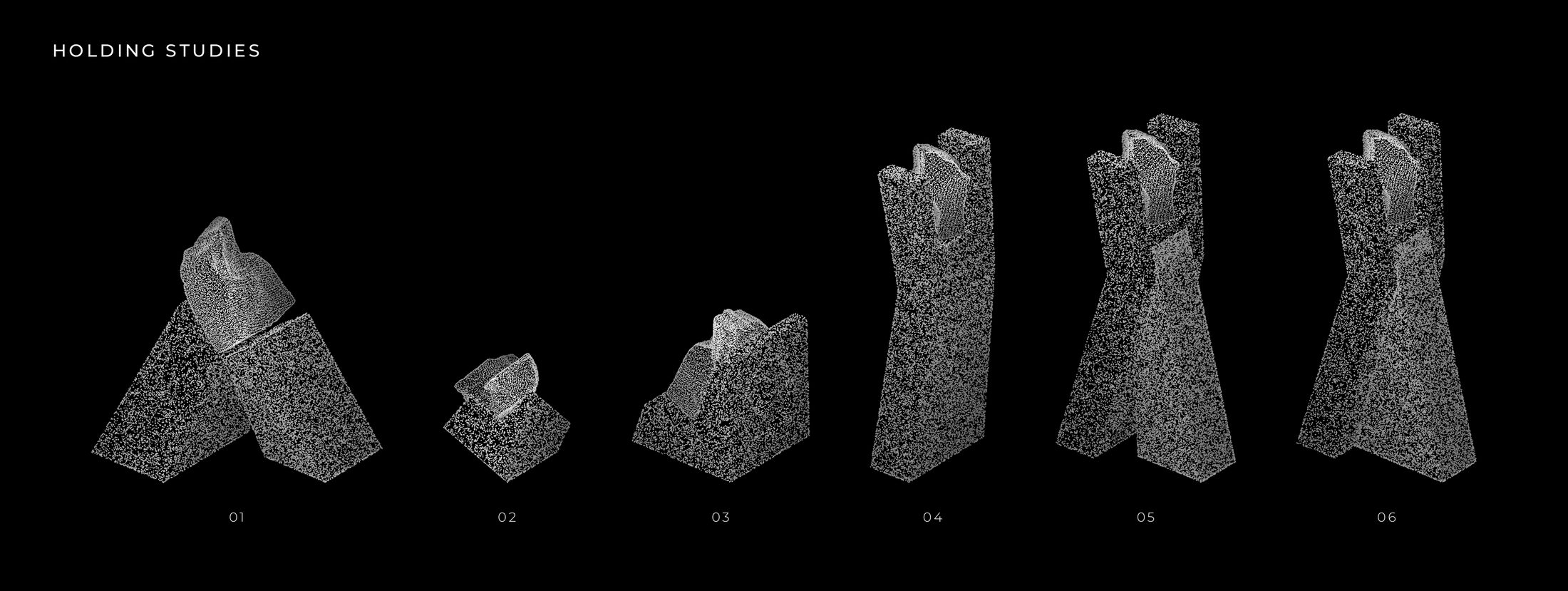 Holding studies
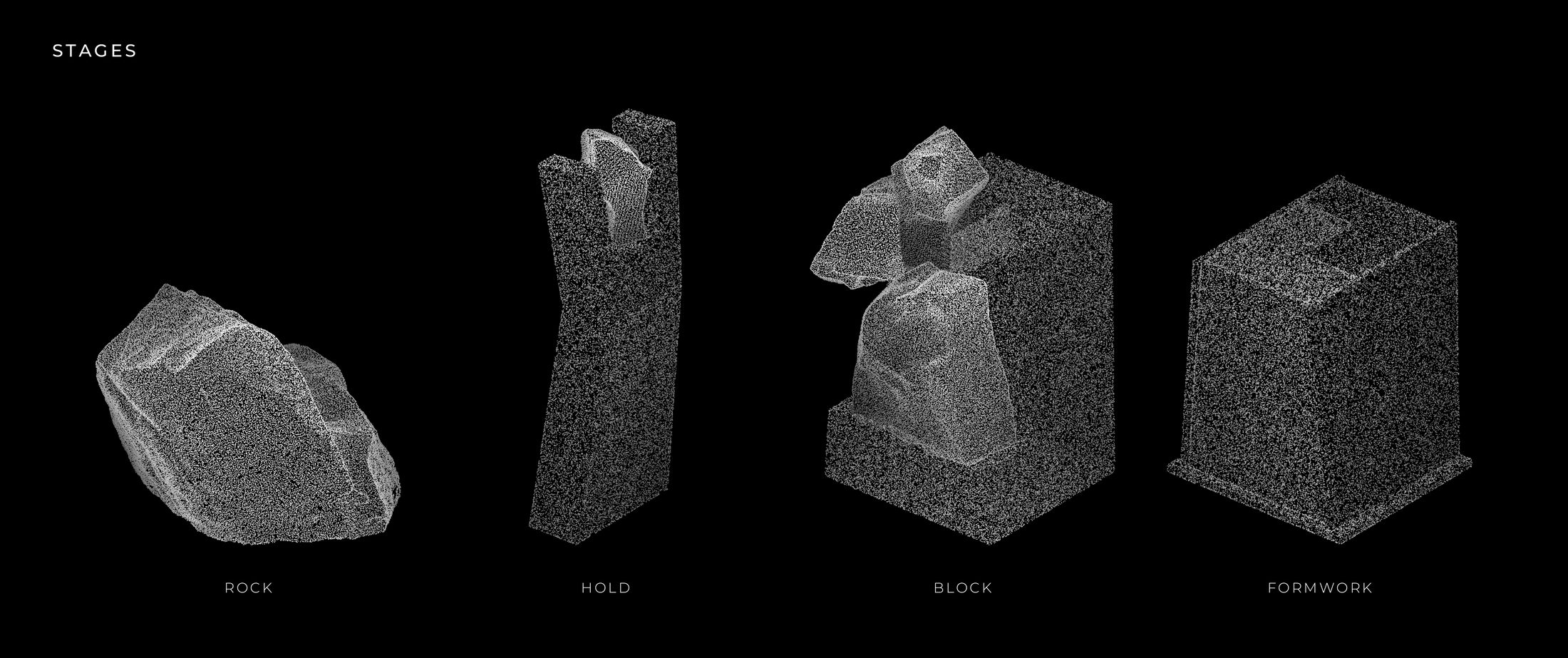 Stages
Point Cloud Studies
Nine Ways
to Read a Rock
The rocks on their pedestals, read seven ways from the same scan, each whole and close up: eye dome lighting, survey greyscale, height ramp, section slab, macro, x-ray and the fit map.
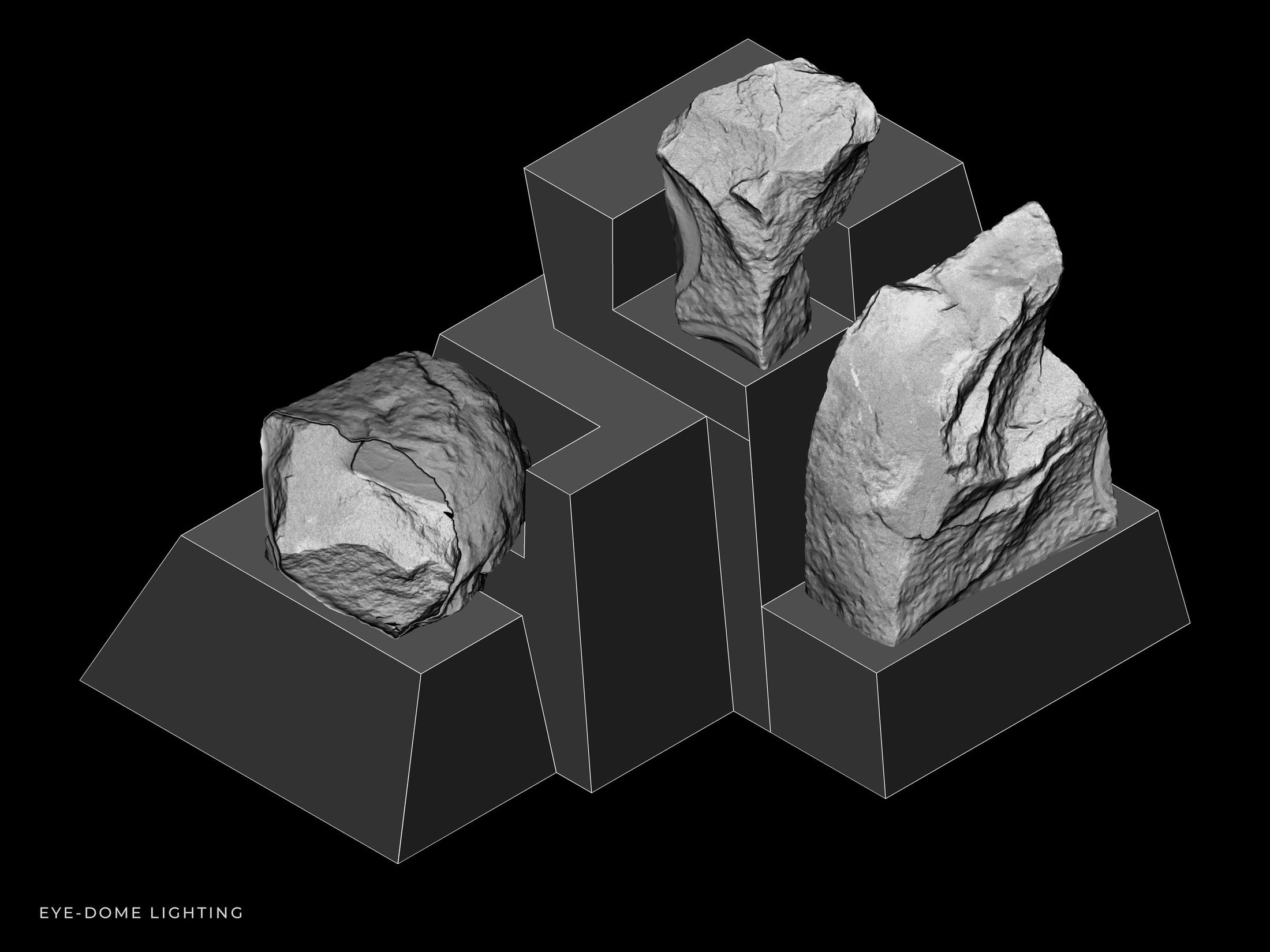 Eye dome lighting, whole
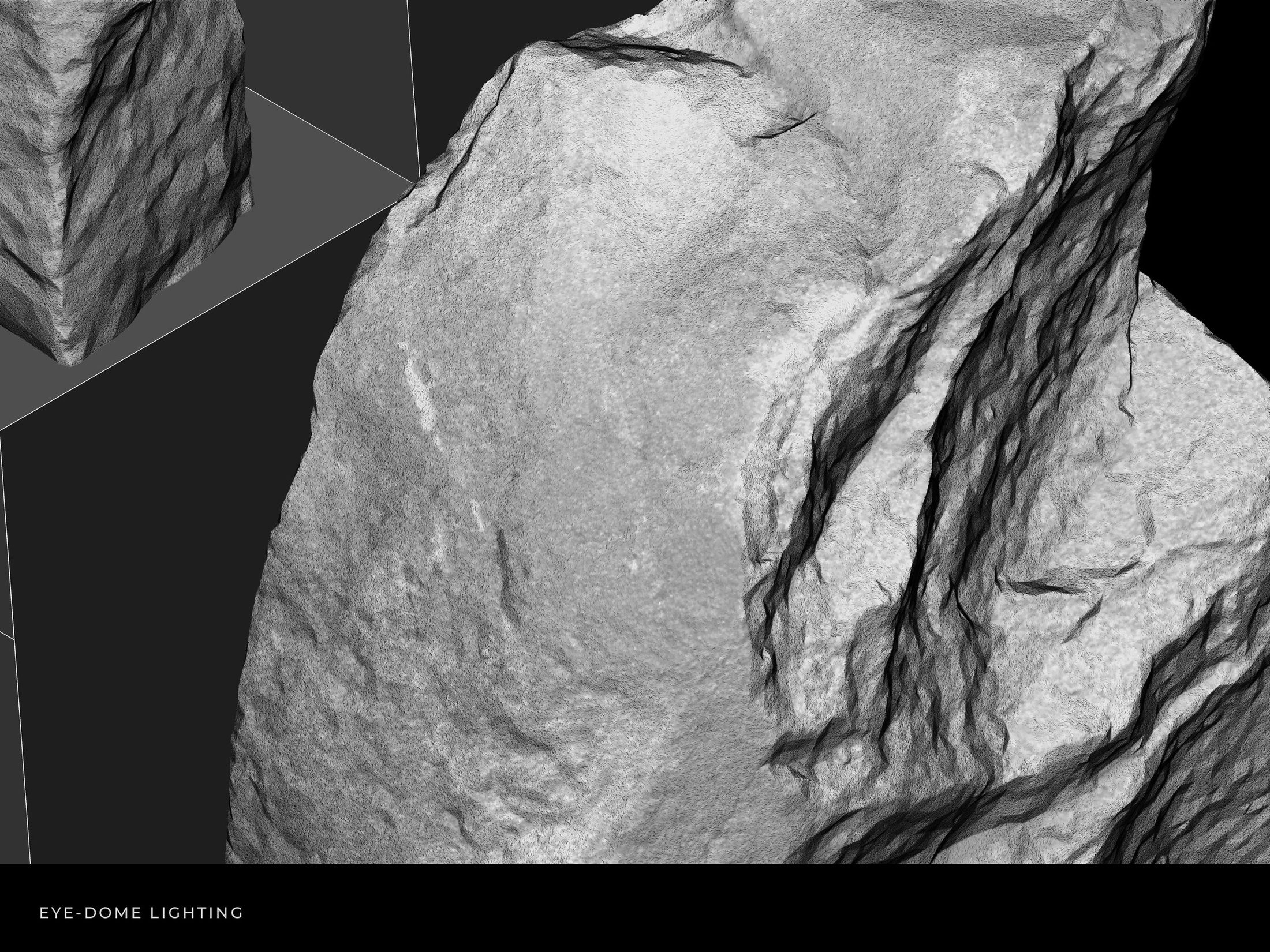 Eye dome lighting, close
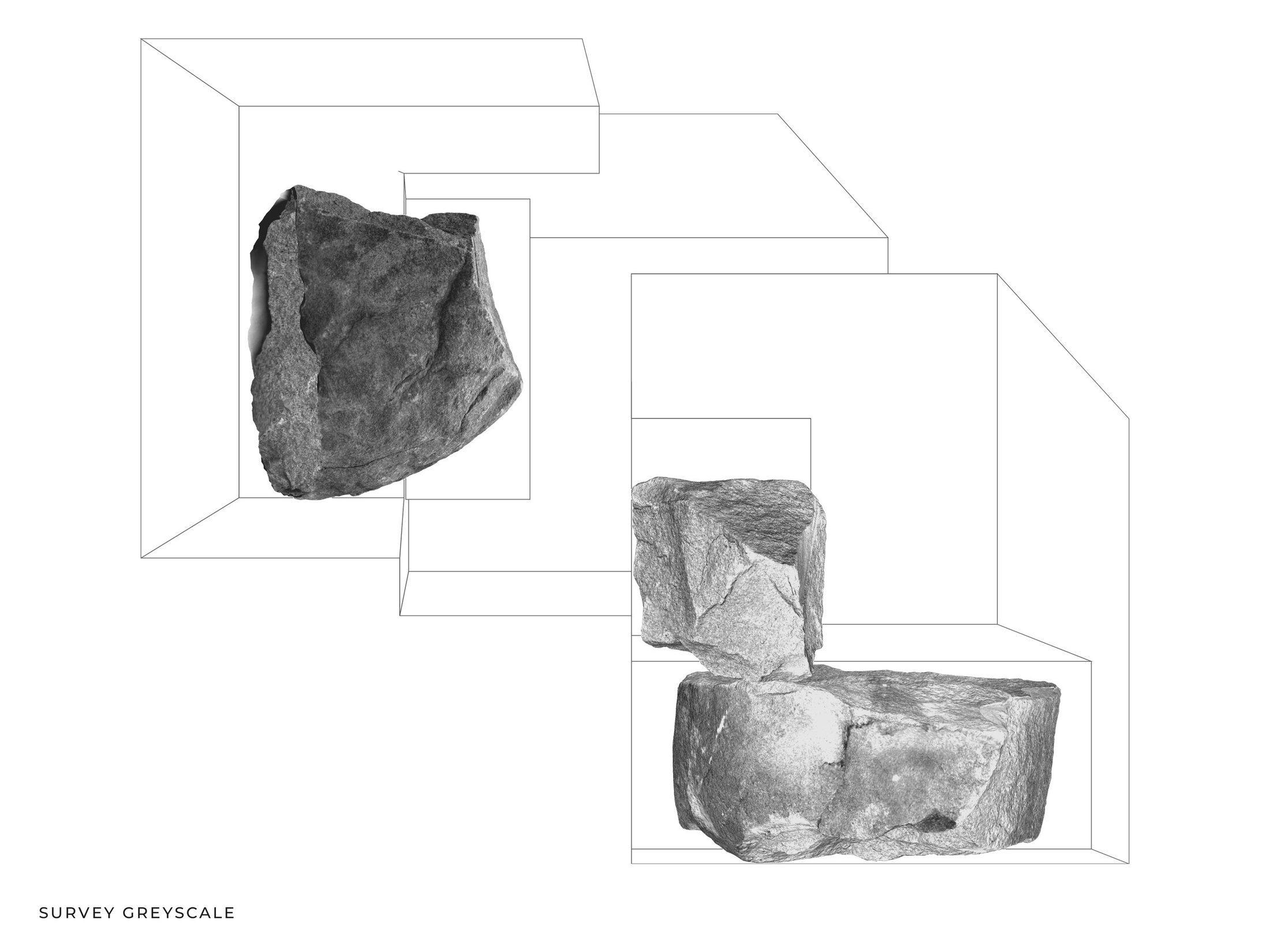 Survey greyscale, whole
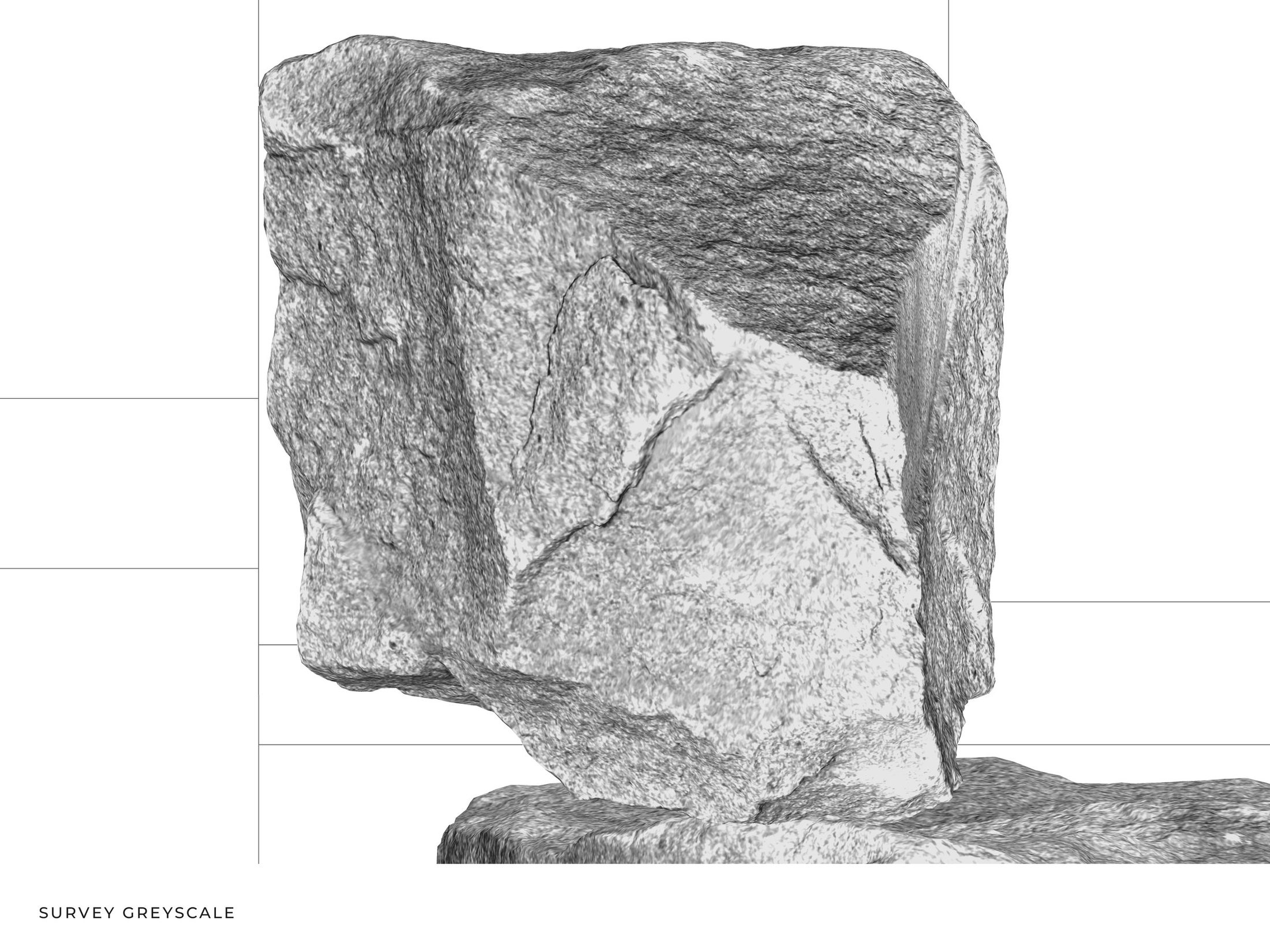 Survey greyscale, close
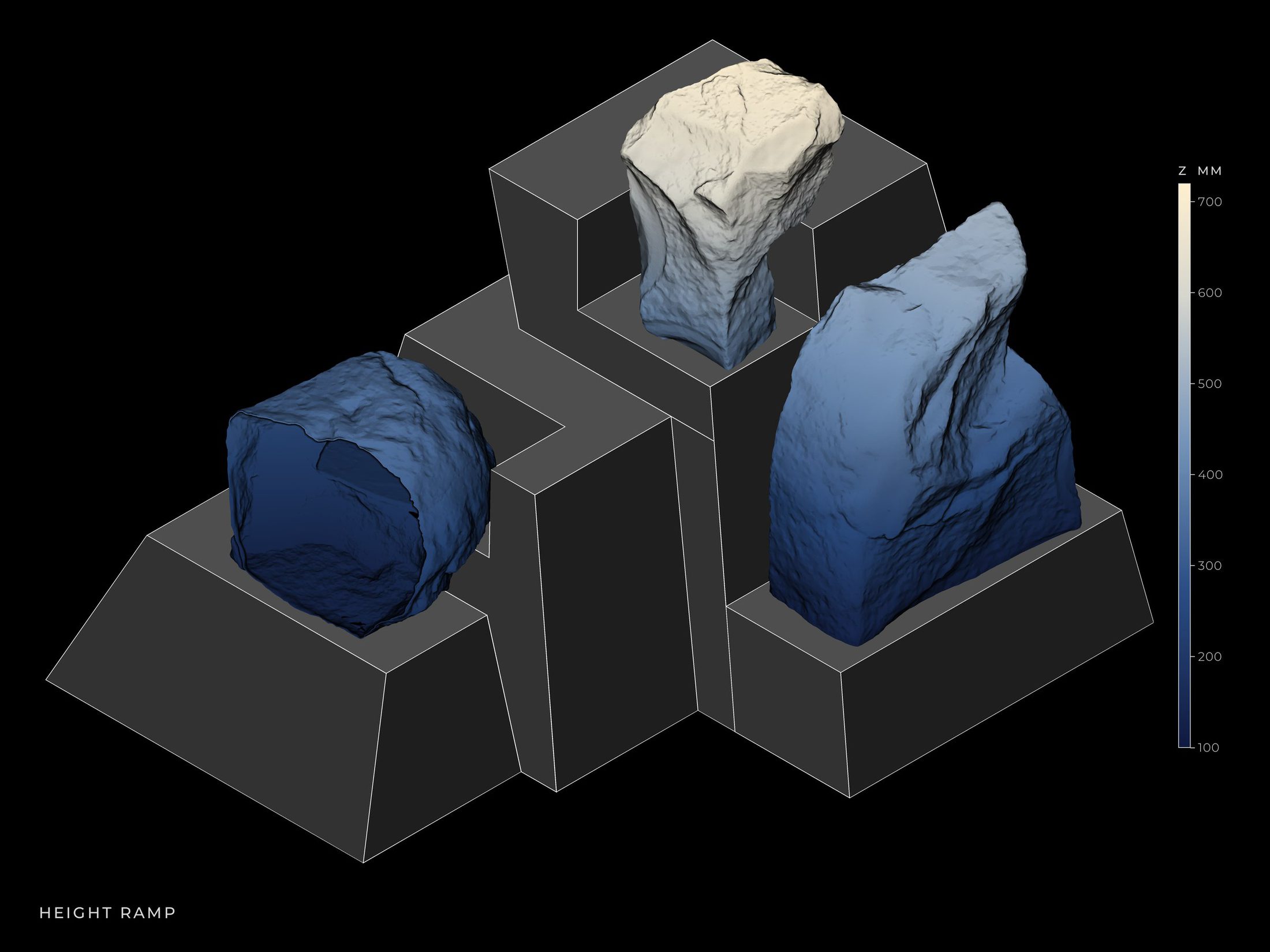 Height ramp, whole
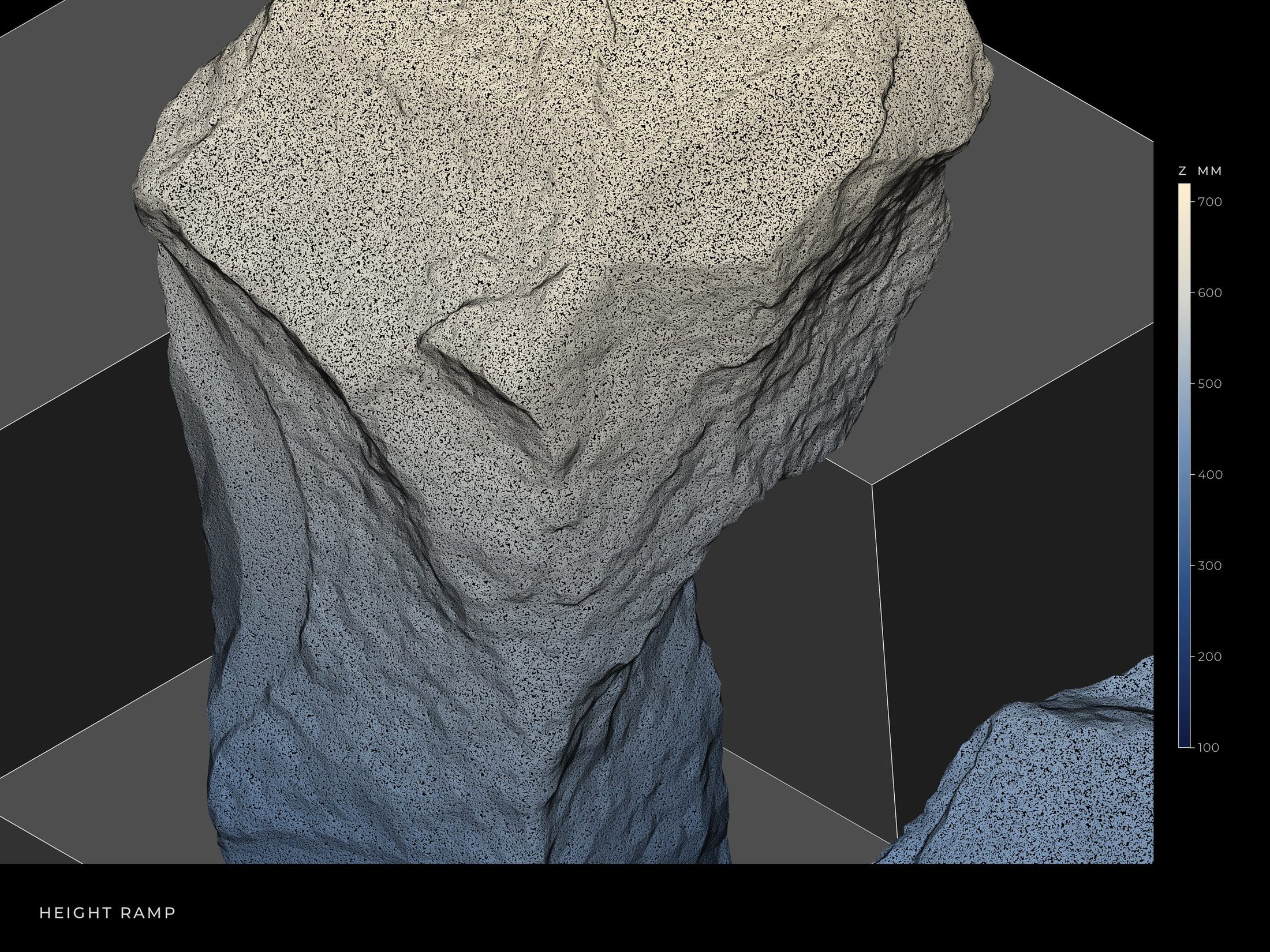 Height ramp, close
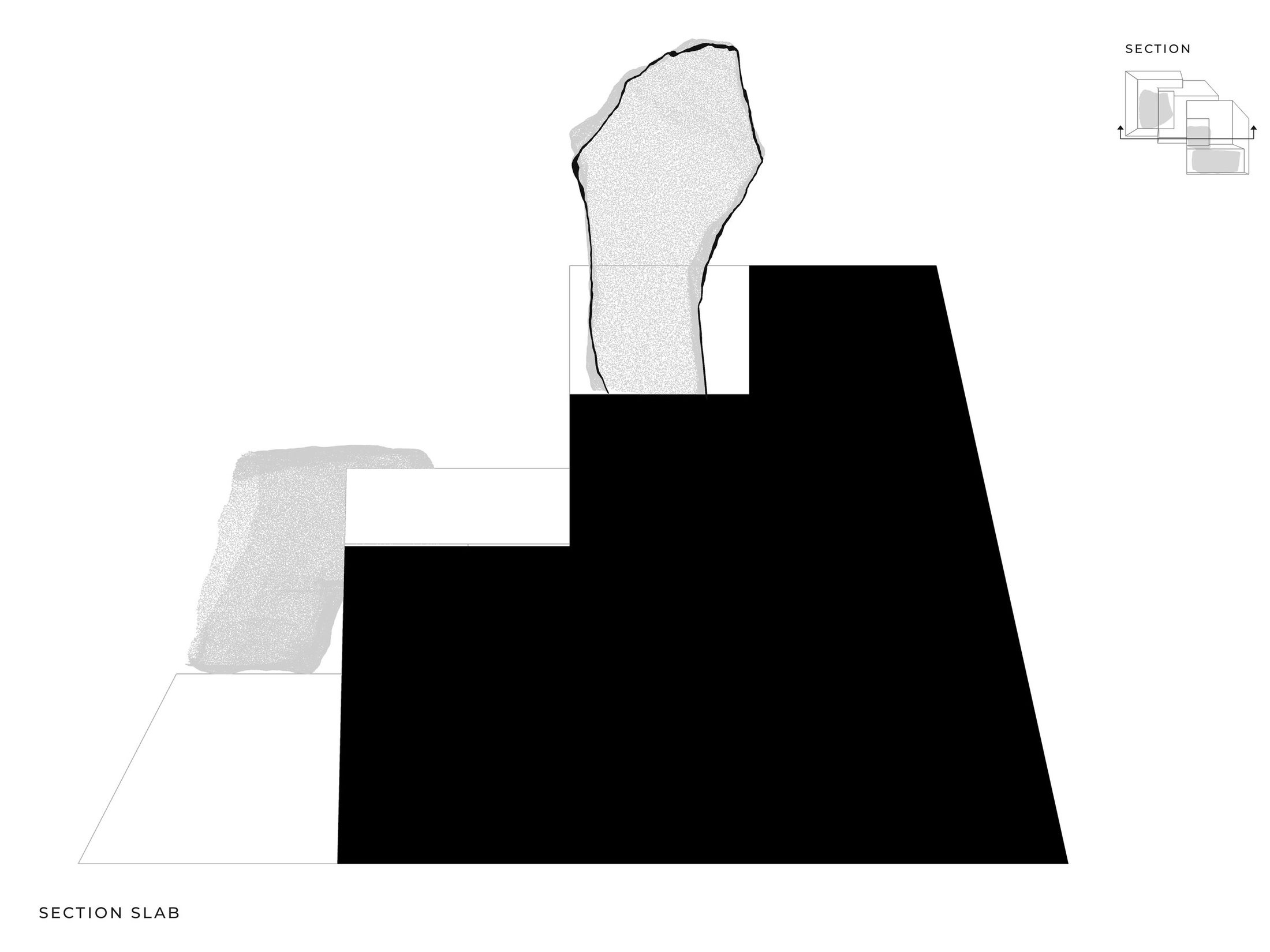 Section slab, whole
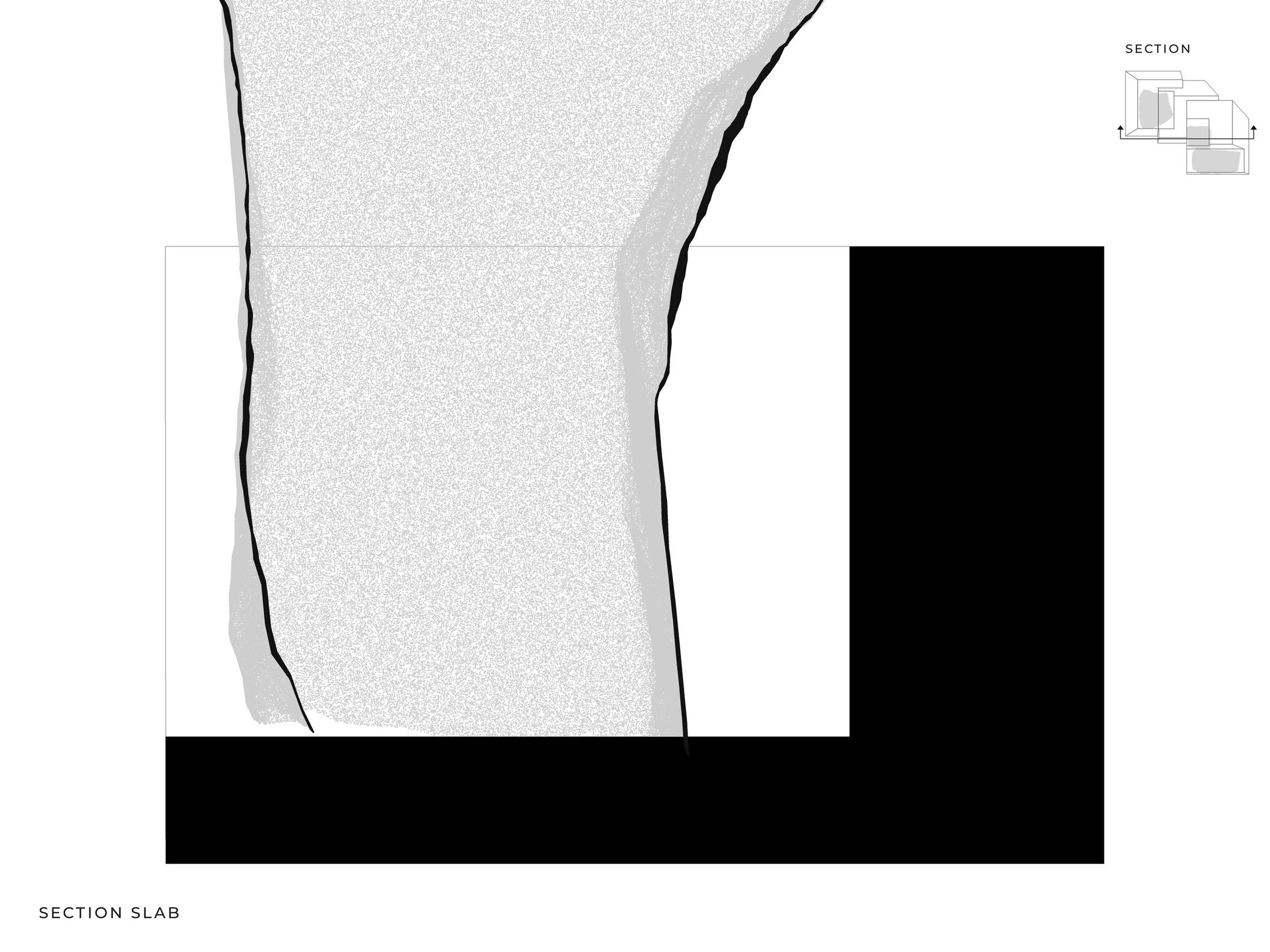 Section slab, close
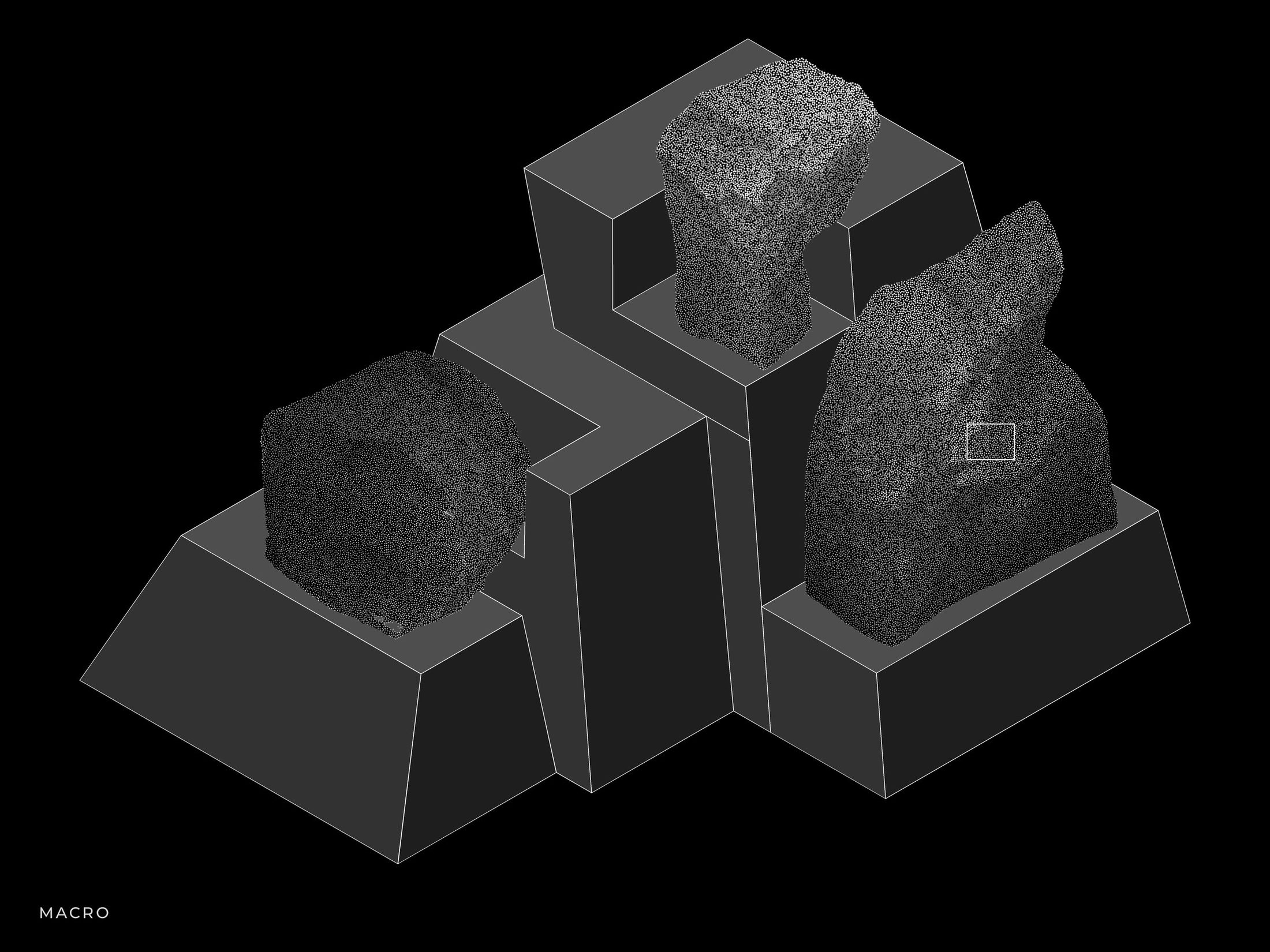 Macro, whole
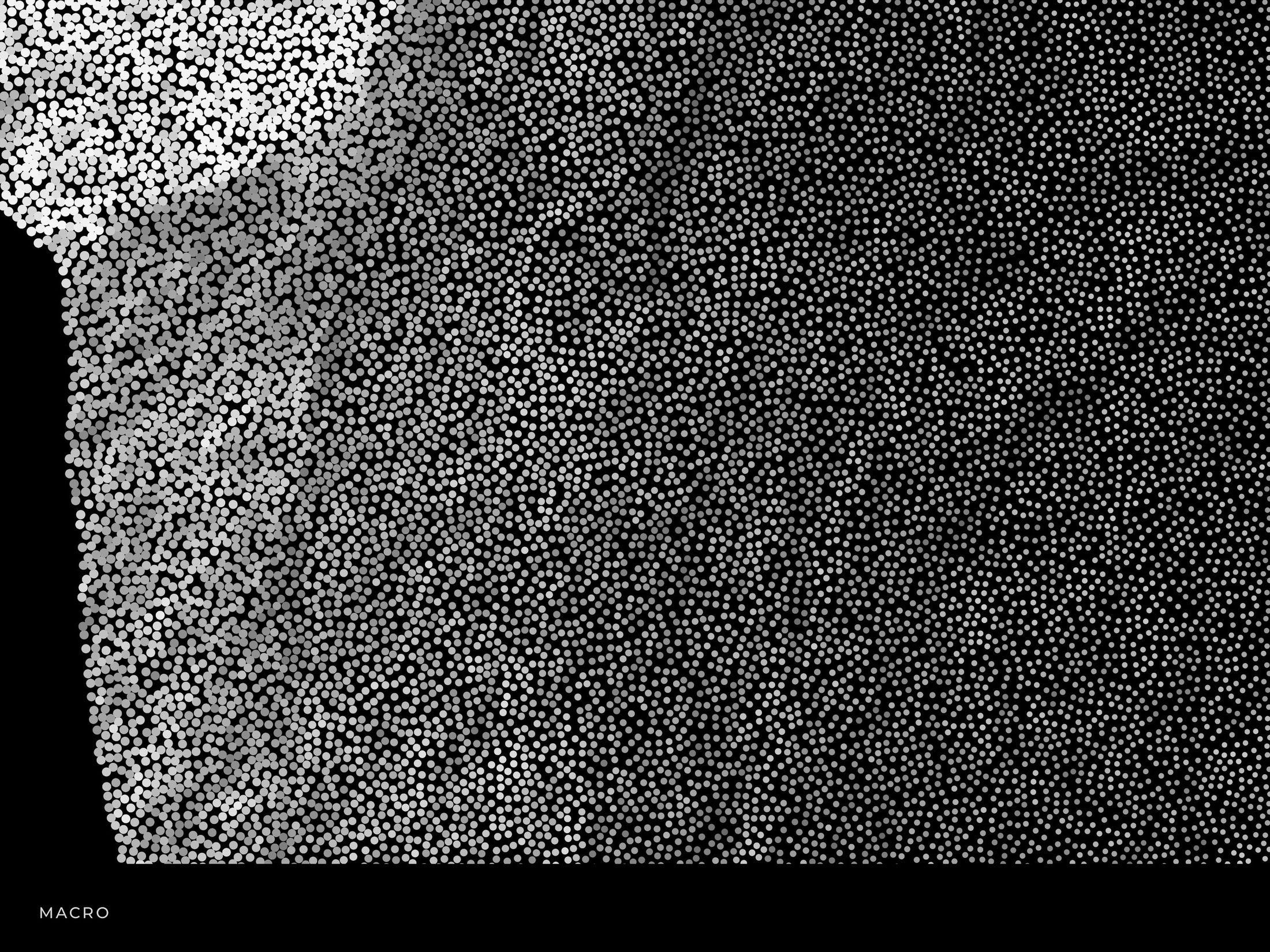 Macro, close
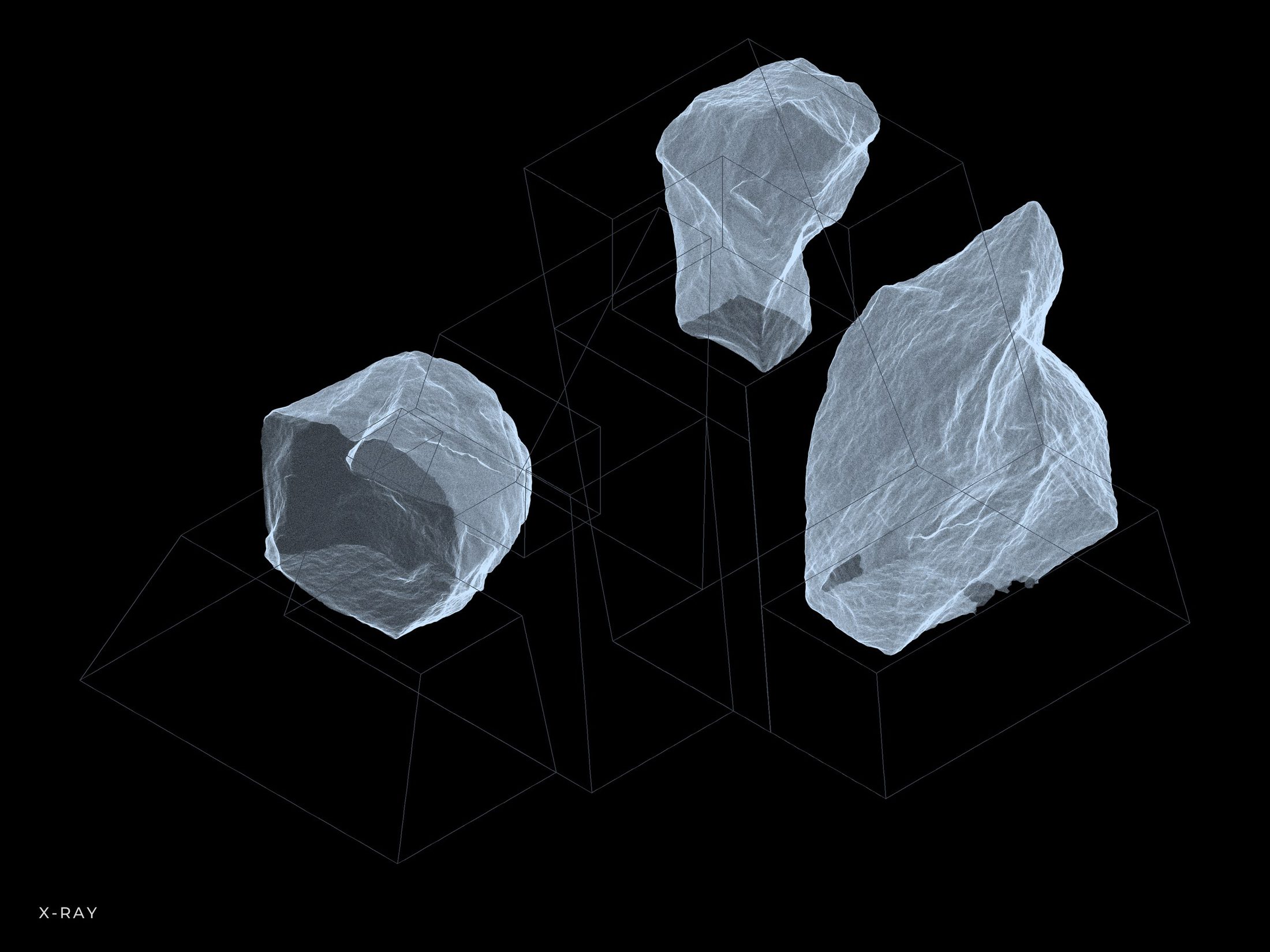 X-ray, whole
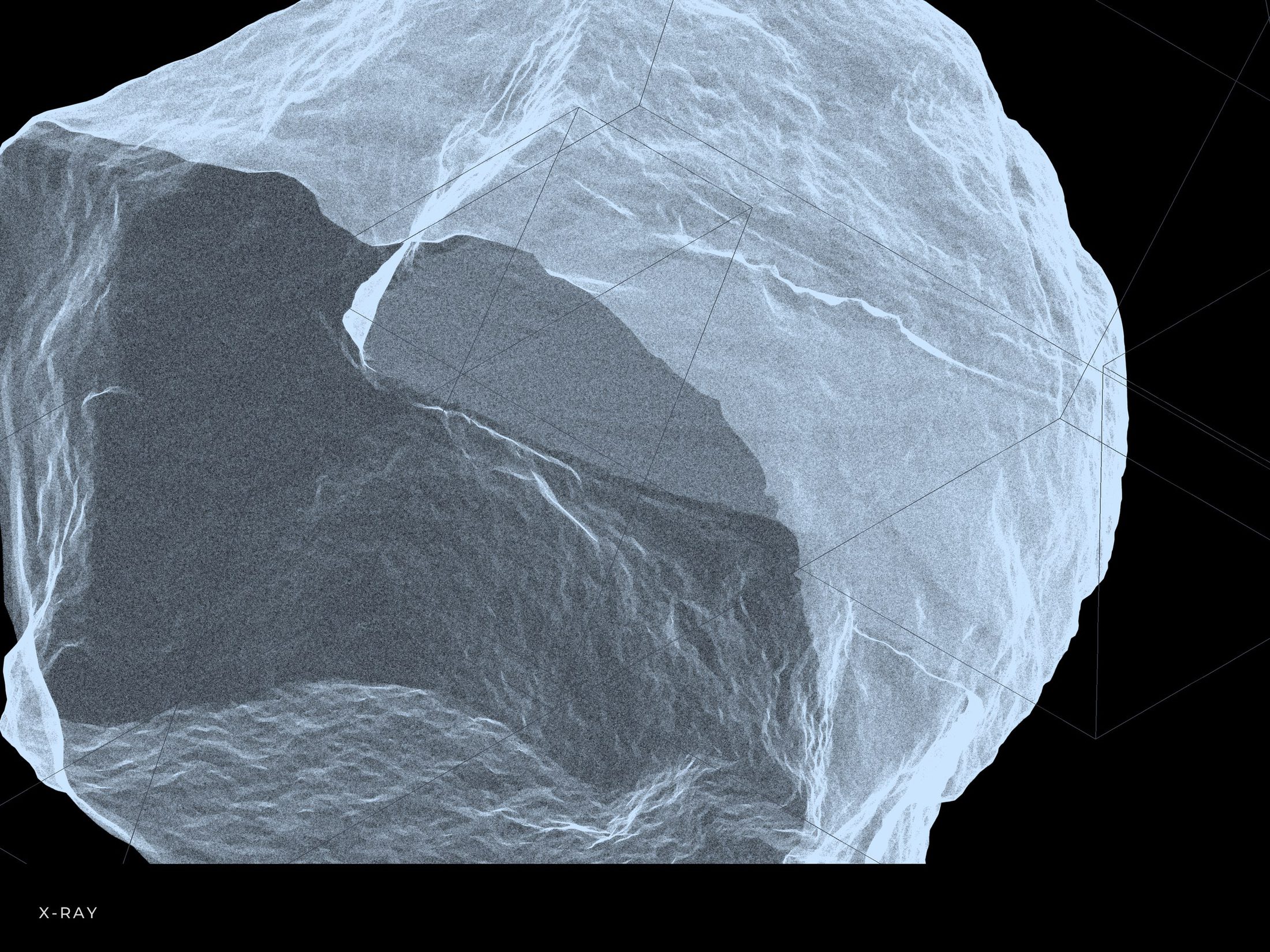 X-ray, close
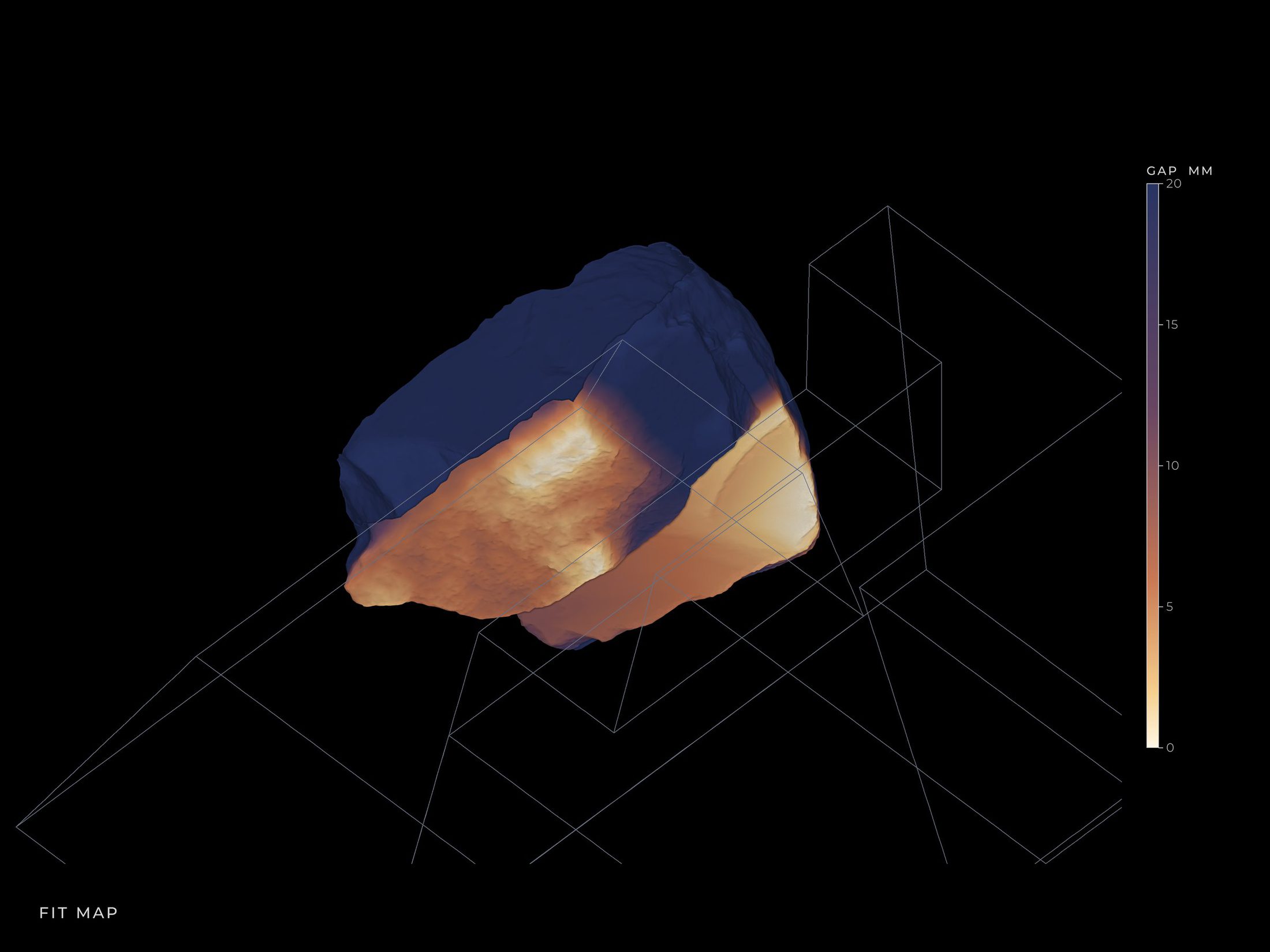 Fit map, whole
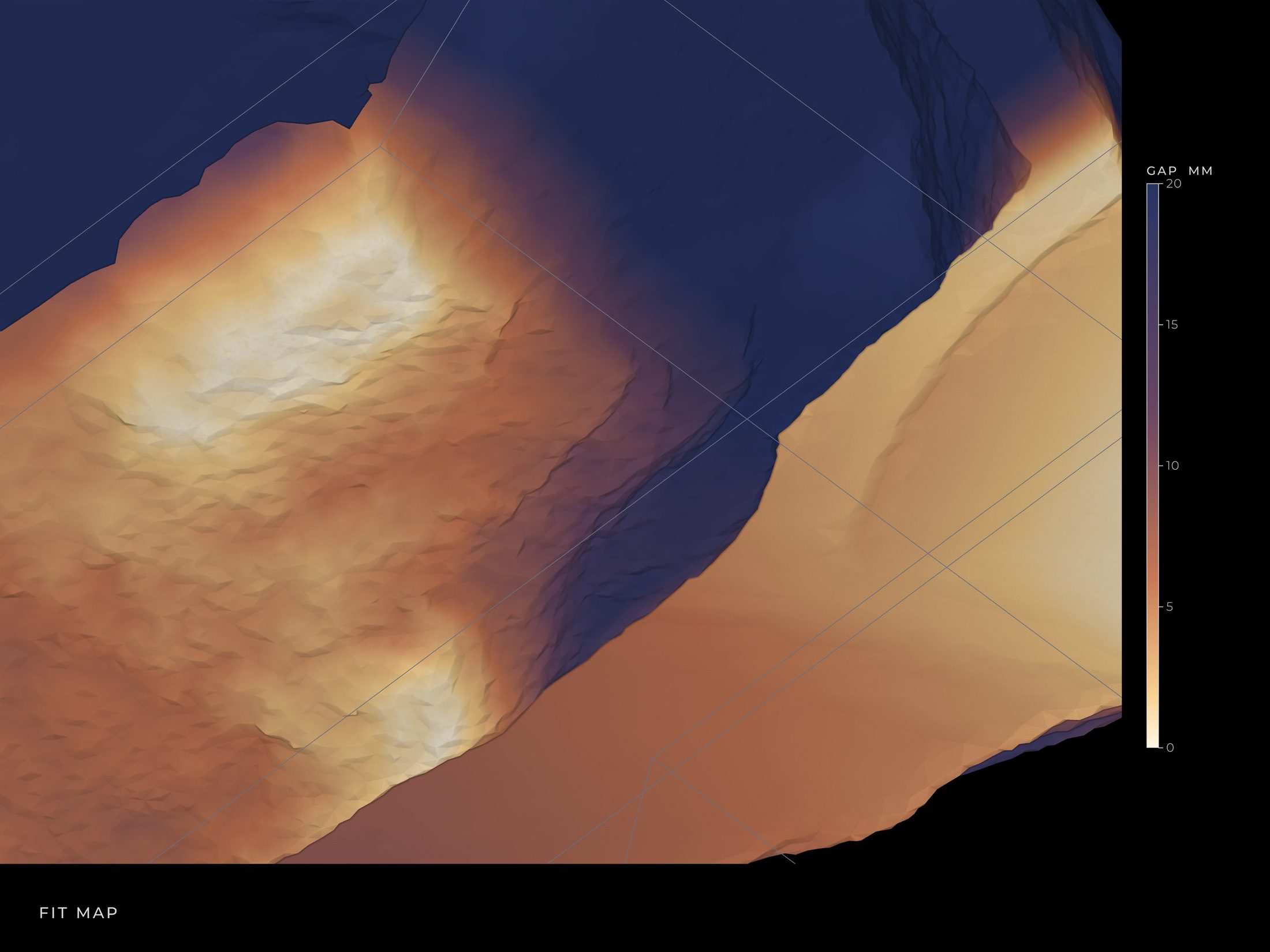 Fit map, close
Making
Rammed
Layer by Layer
Earth, aggregate, plaster and colour were rammed into a tapered plywood formwork one layer at a time. The blocks came out in sand, white and blue, and the rocks went back on top of them.
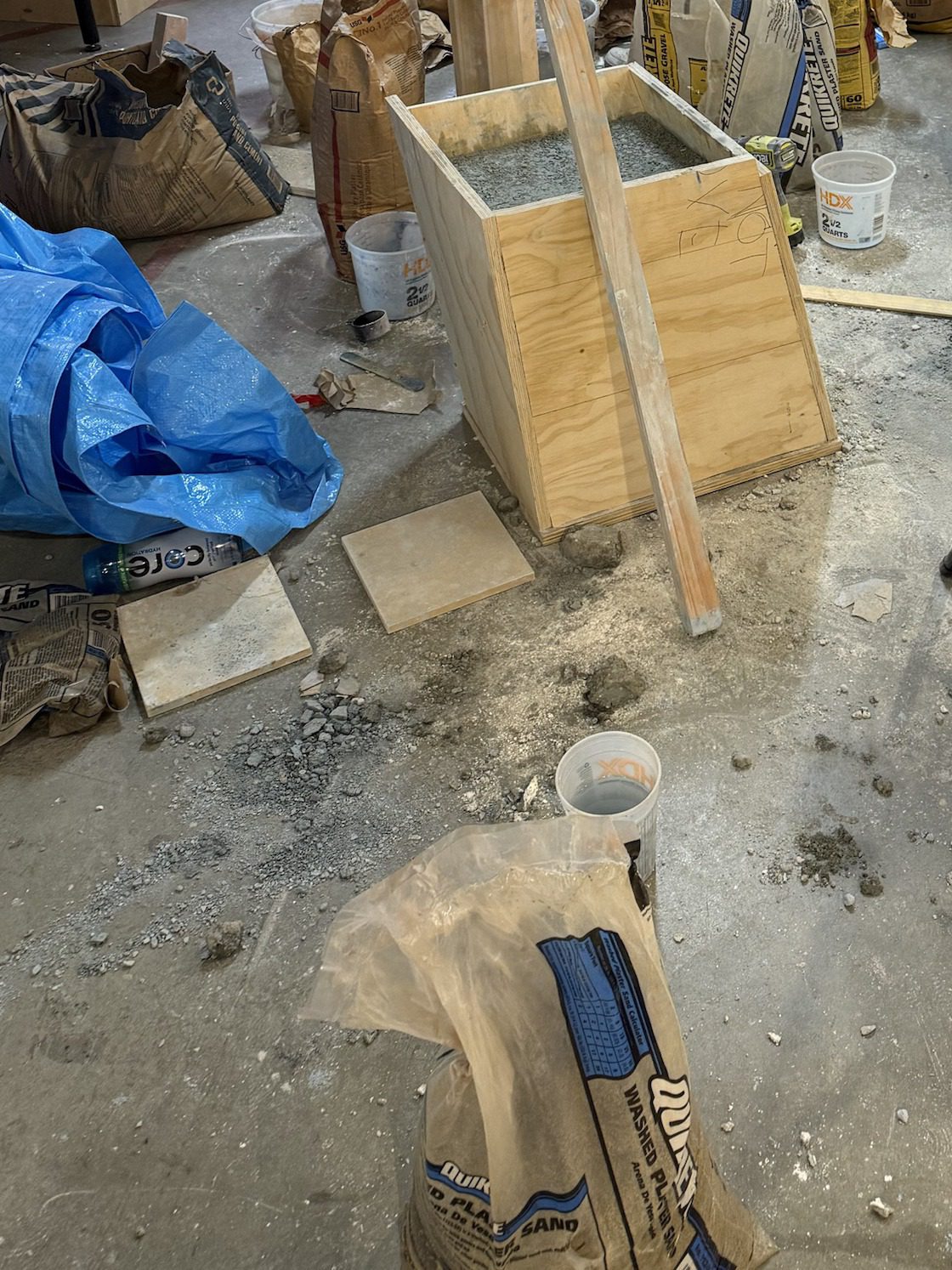 Ramming
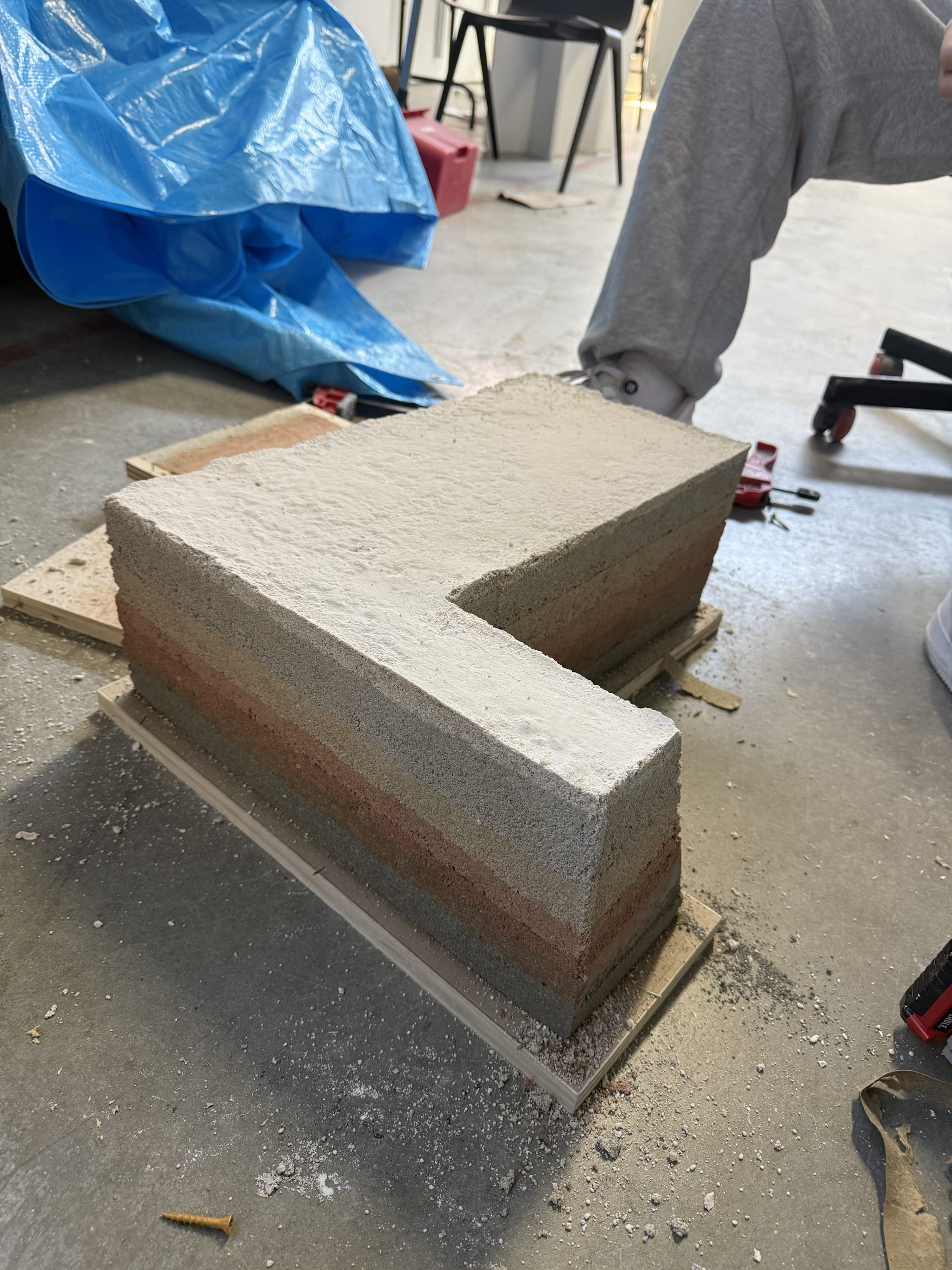 Out of the mould
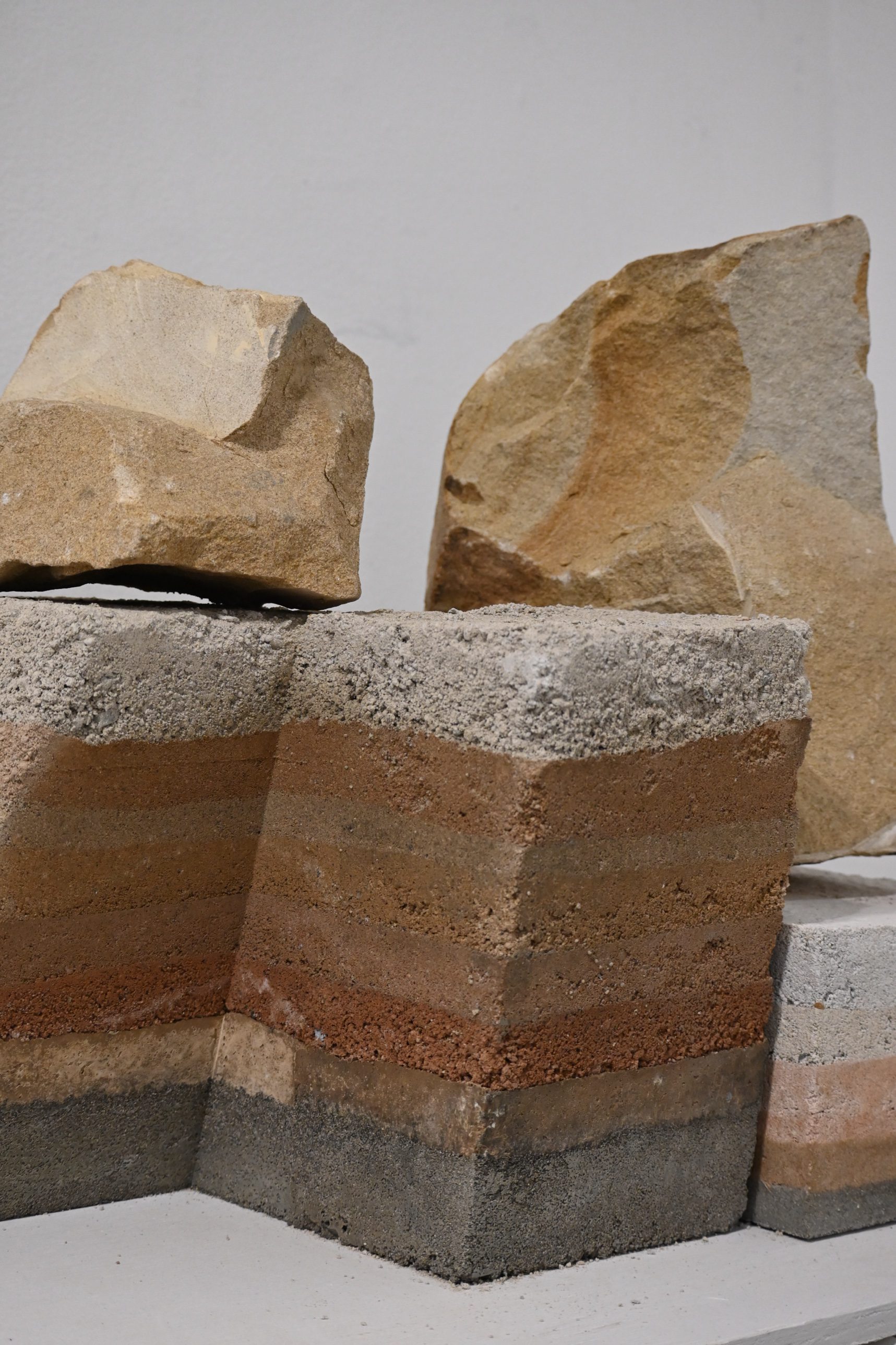 The layers